Our brains are the most extraordinary of all organs — capable of memory, creativity, empathy, and love. And yet, in much of the modern world, they are under siege from what we eat. The foods that fill most supermarket aisles and restaurant menus — ultra-processed, high-fat, and low-fiber — silently inflame our bodies, disrupt circulation, and accelerate aging. But the hopeful news is this: the evidence now shows that what we eat can profoundly influence our risk of developing — and even potentially reverse — the two most common causes of dementia: Alzheimer’s disease and vascular dementia.
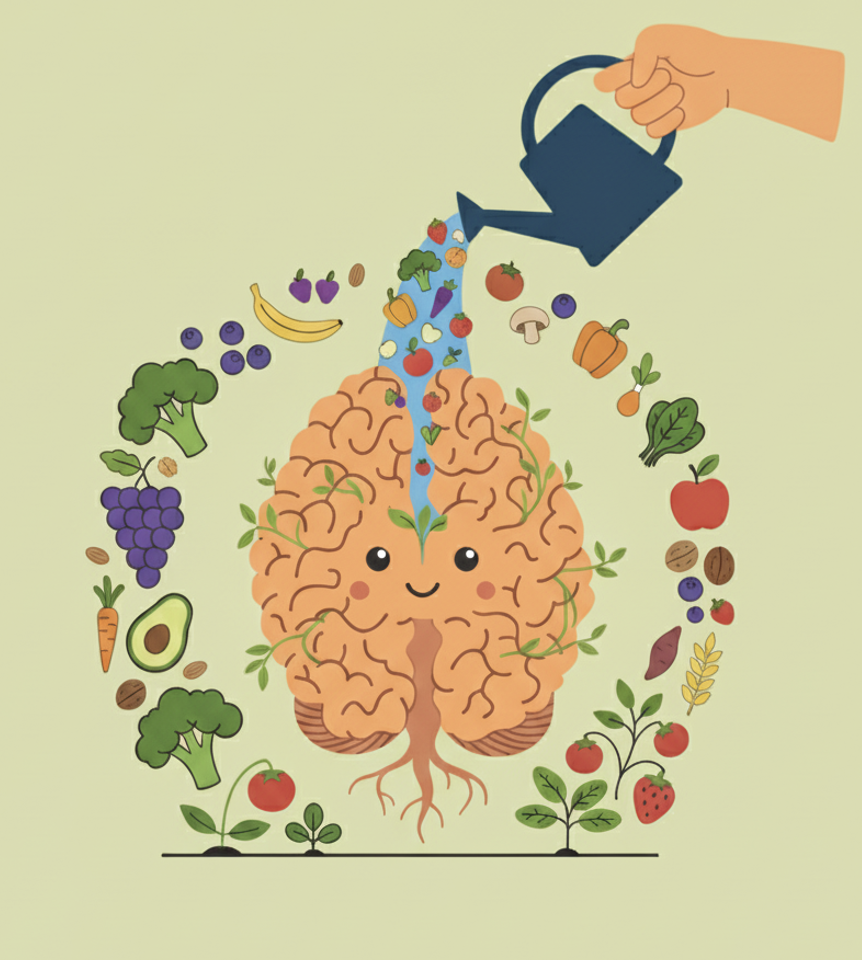
The Science of Food and Brain Longevity
Recent landmark studies, including Dr. Dean Ornish’s 2024 randomized controlled trial, demonstrate that comprehensive lifestyle changes — centered around a whole-food, plant-based (WFPB) diet — can significantly improve cognition and slow, or even reverse, early-stage Alzheimer’s disease after just 20 weeks of intervention (Ornish et al., 2024). These findings build on decades of research linking diet, inflammation, and neurodegenerative disease.
Whole, unprocessed plant foods — rich in antioxidants, polyphenols, and fiber — protect the brain by reducing oxidative stress and enhancing vascular health. They feed the microbiome, support nitric oxide production, and help regulate insulin sensitivity. Each of these factors contributes to healthier blood flow to the brain and the preservation of neural connections.
Lessons from the Longest-Living Societies
Across the world, populations that eat predominantly plant-based whole-food diets — like the Okinawans of Japan, the Adventists of Loma Linda, and traditional Mediterranean communities — show some of the lowest rates of dementia ever recorded. In these cultures, people consume abundant vegetables, fruits, legumes, and nuts while keeping animal products and processed foods to a minimum. These populations don’t just live longer — they maintain sharp minds and vibrant memories well into their 90s and beyond.
For example, the Okinawans once held the world’s highest average life expectancy. Their diets were 97% plant-based, rich in sweet potatoes, green leafy vegetables, and soy. Their elders were known not just for longevity, but for vitality — continuing to garden, dance, and engage socially into their late years.
How Food Activates the Brain’s Five Reparative Systems
See our section on Science and Evidence for a more general discussion on the five reparative systems and how plant-based diets power them all. This section is Adapted from book written by William W. Li, MD (“Eat to Beat Disease,” 2019)
The human brain — only about 2% of our body weight — consumes roughly 20% of all the oxygen and energy we use each day.
It depends on more than 400 miles of tiny blood vessels to deliver nutrients and remove waste. These capillaries are lined with delicate endothelial cells that regulate the brain’s blood flow, protect against toxins, and maintain the blood–brain barrier.
When we eat a poor diet low in plant foods and high in refined oils or animal fats, these endothelial cells become damaged and inflamed. The result is impaired angiogenesis — the process by which new, healthy vessels form — leading to poorer circulation, lower oxygen delivery, and ultimately, a higher risk of cognitive decline and dementia.
By contrast, plant-rich diets restore the brain’s five natural defense and repair systems, each of which protects brain structure, function, and longevity.
🩸 1. Angiogenesis — Nourishing Every Neuron
Healthy angiogenesis is critical to keeping the brain’s vast vascular network open and responsive.
- Plant foods like green tea, turmeric, garlic, tomatoes, and berries support balanced angiogenesis, encouraging new capillaries where oxygen is needed and preventing the abnormal vessel growth seen in stroke and dementia (Li et al., 2019; Carmeliet & Jain, 2011).
- This endothelial “healing” improves blood flow, neurogenesis, and cognitive resilience.
🌱 2. Regeneration — Activating Brain Repair
The adult brain can grow new neurons and strengthen synapses — a process fueled by neural stem cells and neurotrophic factors like BDNF (brain-derived neurotrophic factor).
- Blueberries, cruciferous vegetables, cacao, and walnuts enhance BDNF and neural stem cell activity, supporting learning, memory, and recovery after injury (Rando & Wyss-Coray, 2021).
🦠 3. Microbiome — The Gut–Brain Axis
The gut and brain communicate constantly through nerves, hormones, and immune signals. A healthy microbiome produces metabolites that cross the blood–brain barrier to calm inflammation and boost mood.
- Legumes, greens, whole grains, nuts, and fermented soy feed beneficial bacteria that make short-chain fatty acids like butyrate — molecules that improve cognition and reduce anxiety and depression (Sonnenburg & Bäckhed, 2016).
🧬 4. DNA Protection and Repair
Neurons are long-lived cells that must protect their DNA for decades. Oxidative stress from poor diet accelerates DNA damage, while plant antioxidants switch on repair enzymes.
- Berries, pomegranate, kale, broccoli, and green tea activate Nrf2 and other protective pathways, maintaining genomic integrity in neurons (Collins & Azqueta, 2012).
🛡️ 5. Immunity — Calming Neuroinflammation
Chronic inflammation in the brain is now recognized as a key driver of Alzheimer’s disease and cognitive decline.
- Turmeric, mushrooms, onions, citrus, and leafy greens modulate microglial activity, reducing inflammatory cytokines while enhancing immune surveillance (Calder, 2022; Ornish et al., 2024).
- A diet abundant in anti-inflammatory plant compounds helps the immune system protect rather than attack the brain.
Turning Genes On and Off — The Epigenetic Revolution
Perhaps the most awe-inspiring insight from modern nutrition science is that food doesn’t just fuel our bodies — it programs our genes. Studies show that within months of adopting a plant-based lifestyle, beneficial genes linked to longevity and DNA repair are upregulated, while genes promoting inflammation and cancer are silenced (Ornish et al., 2008; Dusek et al., 2019). The food we eat literally speaks to our DNA, guiding which genetic switches are turned on or off.
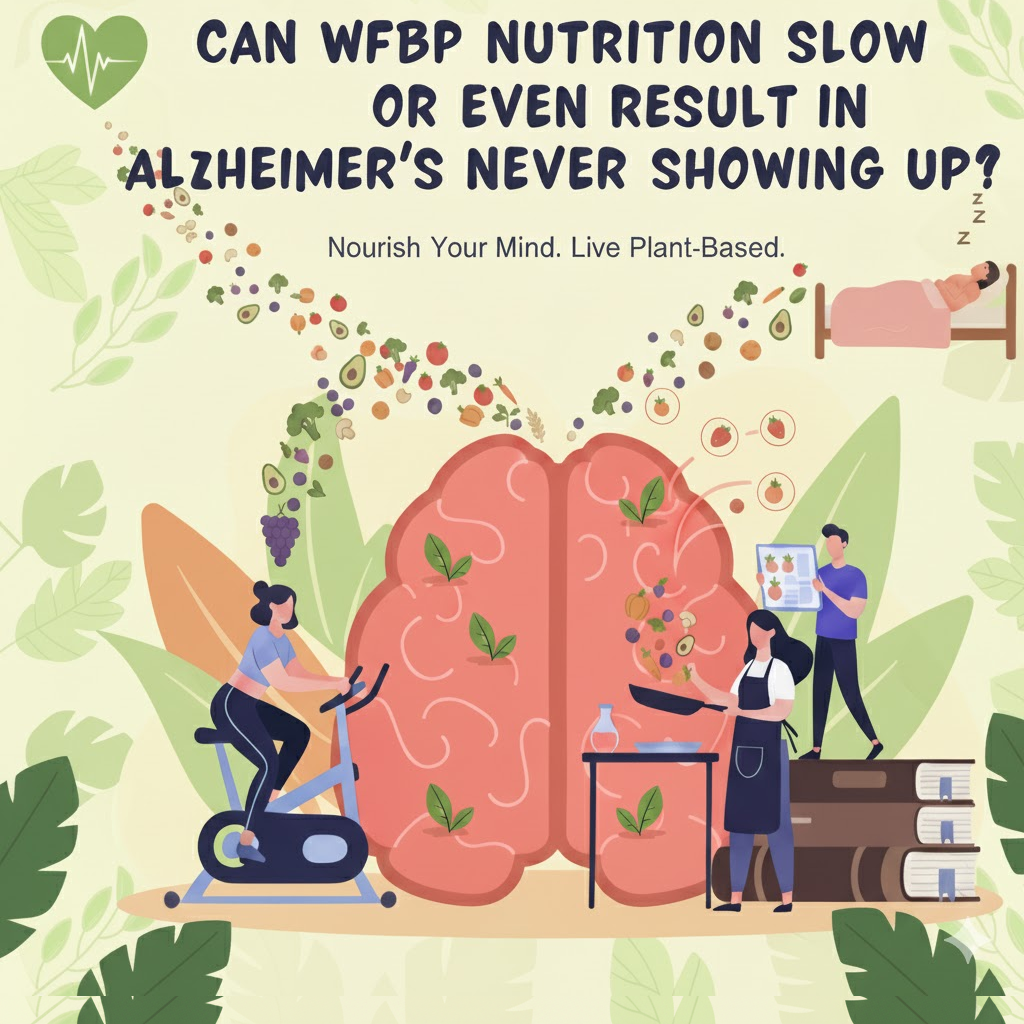
Alzheimer’s disease has many causes — but food is one of the most powerful levers we can control. While keeping the brain active, exercising, sleeping well, enjoying sunshine, and nurturing close relationships all help protect the mind, it’s the hundreds of bioactive compounds in whole-food, plant-based (WFPB) foods that truly fuel these benefits. They calm inflammation, support brain repair, and help keep Alzheimer’s-related genes switched off before damage begins. After all, no matter how good your car is, it can’t run well on bad fuel — and the same is true for your brain.
Neurons are among the longest-lived cells in the body, entrusted with protecting their DNA for decades.
Superfoods like dark leafy greens, broccoli, and other cruciferous vegetables — nature’s “DNA whispers” — help shield these cells from the oxidative stress that a poor diet unleashes. Their antioxidants and polyphenols don’t just neutralize damage; they actually activate the enzymes that repair and rejuvenate DNA, preserving the brain’s genetic blueprint for years to come.
The Added Power of Going 100% Whole-Food, Plant-Based
Even a predominantly plant-based diet dramatically reduces the risk of Alzheimer’s and vascular dementia. But going 100% WFPB — eliminating processed oils, refined sugars, and all animal products — appears to unlock additional benefits. The cleanest diets produce the least inflammation, best vascular function, and the lowest oxidative stress — all crucial for protecting the brain. Studies from Dr. Ornish, Dr. Caldwell Esselstyn, and Dr. Michael Greger consistently show that such diets can halt or reverse heart disease, a major risk factor for vascular dementia. And since what’s good for the heart is good for the brain, the same dietary pattern likely preserves and restores brain function too.
Food as Medicine for the Mind
The prevailing evidence suggests that a predominantly — or ideally, fully — whole-food, plant-based diet may not only prevent dementia but also support reversal of its earliest stages. When paired with restorative sleep, physical activity, and social connection, these foods create the biochemical conditions for regeneration and repair. The combination of plant omega-3s (from flax, chia, and walnuts), leafy greens, berries, and legumes is a symphony for the brain — improving memory, mood, and cognition. For more on both plant and animal sources of omega-3s, see the side box.
As Dr. Michael Greger reminds us, “There are some things medicine can’t do — but your knife and fork can.” The choice to eat plants is not about restriction — it’s about liberation. It’s about waking up with clarity, aging without decline, and protecting the memories that make us who we are.
A 100-Year Brain
Imagine a world where we live not just longer, but sharper — where our final decade feels like a victory lap, not a slow fade. The science is clear: the more whole, unprocessed plants we eat, the greater our chance of a lifetime of vitality and mental clarity.
So fill your plate with color. Celebrate broccoli, beans, berries, and greens. Because every bite of real food is a message to your DNA — a message that says:
Grow strong. Repair. Remember.
The Planetary Health Diet and Omega-3s
🧠 Omega-3s and the Planetary Health Diet that includes fish
For those following a predominantly whole-food, plant-based (WFPB) diet, the most potent sources of omega-3 fatty acids are fatty fish such as salmon, sardines, mackerel, herring, and anchovies. These species are rich in EPA and DHA and tend to accumulate fewer pollutants when sourced from clean, cold-water, sustainably managed fisheries.
Choosing wild-caught Alaskan salmon or small oily fish like sardines and anchovies offers the best balance of high omega-3 content and low contaminant risk.
It’s also important to eat fish in the quantities recommended by the Planetary Health Diet:
🐟 1–2 servings per week (3–4 oz each) of oily, low-contaminant fish — about 7 ounces (200 g) per week — aligns perfectly with global health and sustainability goals.
🌿 Plant-Based Sources of Omega-3s for those eating 100% WFBP
For those who choose a 100% whole-food, plant-based (WFPB) diet, powerful omega-3 options come directly from plants. Key sources of ALA (alpha-linolenic acid) — the essential fatty acid the body can convert into EPA and DHA — include:
• Flaxseeds (ground or as flaxseed meal)
• Chia seeds
• Walnuts
• Hemp seeds
• Canola oil (cold-pressed, in moderation)
Although conversion from ALA to DHA/EPA is limited, adding a daily supplement of algae-based DHA/EPA oil provides the same active omega-3s found in fish — without pollutants or animal products.
Together, these foods and supplements make it entirely possible to meet brain- and heart-healthy omega-3 needs while remaining fully plant-based.
References:
- Ornish et al., Alzheimer’s Research & Therapy, 2024.
- Ornish et al., PNAS, 2008 – Gene expression changes with lifestyle intervention.
- Dusek et al., Frontiers in Immunology, 2019 – Epigenetic modulation and immune gene expression.
- Greger M., How Not to Age, 2023.
- Esselstyn C., Prevent and Reverse Heart Disease, 2007.
- Buettner D., The Blue Zones, 2008.
- Li WW. Eat to Beat Disease: The New Science of How Your Body Can Heal Itself. Grand Central Publishing; 2019.
- Carmeliet P, Jain RK. “Principles and mechanisms of vessel normalization for cancer and other angiogenic diseases.” Nat Rev Drug Discov. 2011;10(6):417–427.
- Rando TA, Wyss-Coray T. “Stem cells and aging: mechanisms, rejuvenation, and future directions.” Cell. 2021;184(6):1561–1577.
- Sonnenburg JL, Bäckhed F. “Diet–microbiota interactions as moderators of human metabolism.” Nature. 2016;535(7610):56–64.
- Collins AR, Azqueta A. “DNA repair as a biomarker in human biomonitoring studies.” Mutat Res. 2012;736(1-2):84–92.
- Calder PC. “Nutrition, immunity and COVID-19.” BMJ Nutr Prev Health. 2022;5(1):10–20.
- Ornish D et al. “Effects of intensive lifestyle changes on the progression of mild cognitive impairment or early dementia due to Alzheimer’s disease.” Alzheimers Res Ther. 2024;16:122.