“We are literally on the cusp of what could truly be a seismic revolution in health, and this seismic revolution is never going to come about from another pill, or drug, or procedure, or operation. This seismic revolution will come about when we have the will and the grit and determination to share with the public what is the lifestyle, and most specifically what is the nutritional literacy that will empower them as the locus of control that can vanquish chronic illness.”
— Dr. Caldwell B. Esselstyn, Jr. MD - Pioneering physician proving heart disease reversal with a WFPB diet.
The Science Is Clear — and Urgent
The Global Burden of Disease (GBD) Study — the most comprehensive epidemiological analysis ever conducted — found that unhealthy diets now cause more disease and premature death than any other lifestyle factor on Earth.
Poor diet has overtaken tobacco, hunger, and infectious diseases as the world’s leading cause of preventable illness — fueling epidemics of heart disease, diabetes, cancer, and dementia on an unprecedented scale.
What are we getting wrong?
The 2017 GBD analysis made it unmistakable: humanity is eating too few whole plant foods — the fruits, vegetables, whole grains, legumes, nuts, seeds, and omega-3–rich plants that our bodies and planet were designed to thrive on. In their place, we’ve flooded our diets with refined sugars and starches, saturated fats, salt, ultra-processed foods, and excessive animal products.
This imbalance is not just making us sick — it’s destabilizing the planet itself. The same foods that harm our hearts are heating our climate, degrading our soils, and destroying biodiversity. Rebalancing the plate toward whole, plant-rich foods is not only the single most powerful step we can take for human health — it’s essential for the survival of life on Earth.
The Evidence Is Overwhelming
High-quality nutrition science — from massive cohort studies to randomized clinical trials — now consistently points to one solution: eat more whole, plant-based foods and fewer animal-based and ultra-processed ones.
Across thousands of peer-reviewed studies, this pattern emerges again and again: populations consuming diets rich in whole plants live longer, healthier lives and leave a lighter footprint on the planet.
Yet despite decades of clear evidence, confusion about what to eat has never been greater. Every week brings a new diet headline or viral influencer claiming to have the answer. Meanwhile, most people in high-income countries still get the bulk of their calories from ultra-processed foods, sugary drinks, refined grains, and meat-heavy meals.
In the United States, fewer than 12.1% adults (CDC 2017) eat the recommended amount of fruits and vegetables each day.
The Body’s Five Defense Systems — and How Plants Power Them All
Modern science reveals something extraordinary: the human body is not a passive victim of disease. It comes equipped with five powerful biological defense systems that constantly protect, repair, and renew us.
Dr. William W. Li’s research (Li et al., 2019) shows that food is among the most potent ways to activate these systems — and that whole, plant-based foods support all five simultaneously.
1. Angiogenesis – The System of Blood Vessel Growth
Our capillaries deliver oxygen and nutrients to every cell. Healthy angiogenesis keeps this network balanced—allowing new vessels to grow where needed (like healing a wound), while preventing excess vessel growth that can feed tumors or cause blindness. The brain alone has more than 400 miles of tiny blood vessels, working constantly to deliver nutrients and remove waste. These capillaries—and blood vessels throughout the body—are lined with delicate endothelial cells that regulate blood flow, protect against toxins, and maintain a Teflon-like surface inside our arteries that prevents clots and inflammation. When this protective lining breaks down, it increases the risk of heart attacks, strokes, and inflammation in the brain—damage linked to Alzheimer’s disease and vascular dementia.
A plant-rich, antioxidant diet helps preserve this Teflon-like protection that keeps every organ strong and resilient.
- Plant power: Green tea catechins, soy isoflavones, turmeric curcumin, and compounds in berries, garlic, and tomatoes can safely inhibit abnormal vessel growth while supporting healthy regeneration (Li et al., 2019; Carmeliet & Jain, 2011).
2. Regeneration – The System of Stem Cells
Even in adulthood, stem cells remain active in repairing our tissues. Certain plant compounds can boost stem cell survival and mobilization.
- Plant power: Blueberries, walnuts, cruciferous vegetables, and dark chocolate polyphenols stimulate tissue repair and stem cell resilience (Li et al., 2019; Rando & Wyss-Coray, 2021).
3. Microbiome – The Gut’s Inner Ecosystem
Our gut microbiota shape immunity, metabolism, and even mood. A diverse, fiber-rich plant-based diet nourishes beneficial microbes that produce short-chain fatty acids, strengthen the gut barrier, and regulate inflammation.
- Plant power: Beans, whole grains, leafy greens, nuts, and fermented soy foster microbiome diversity and “postbiotic” molecules that calm inflammation and improve metabolic health (Li et al., 2019; Sonnenburg & Bäckhed, 2016).
4. DNA Protection and Repair
Every day, our DNA experiences tens of thousands of hits from oxidative stress and environmental toxins. Phytochemicals from plants enhance the body’s repair enzymes and neutralize free radicals.
- Plant power: Antioxidants in berries, pomegranates, green tea, and cruciferous vegetables help maintain genomic stability and slow cellular aging (Li et al., 2019; Collins & Azqueta, 2012).
5. Immunity – The System of Defense and Renewal
A well-regulated immune system defends against pathogens while avoiding chronic inflammation that drives disease.
- Plant power: Mushrooms, onions, citrus, turmeric, and colorful fruits and vegetables provide β-glucans, quercetin, vitamin C, and thousands of phytonutrients that train the immune system to respond appropriately (Li et al., 2019; Calder, 2022).
Why The Five Defense Systems and Plants Matter — Your Body’s Default Setting is to Heal Itself
Each system is interconnected — and a predominantly whole-food, plant-based diet amplifies their synergy. These same mechanisms also explain why the Planetary Health Diet can simultaneously prevent disease, promote healing and repair, and often result in longevity.
Our bodies are not designed for chronic disease — they are designed to heal. Every cell, tissue, and organ has built-in repair mechanisms that operate constantly to restore balance and maintain life. This self-healing default mode is the body’s natural state. However, when we fail to nourish it with the diversity of whole, plant-based foods it depends on — rich in antioxidants, phytonutrients, fiber, and anti-inflammatory compounds — these defense systems become impaired. Instead of healing, the body shifts into chronic inflammation, oxidative stress, and metabolic dysfunction — the root causes of most modern diseases.
When that happens, disease begins to dominate. For many people, the decline starts quietly in midlife — blood pressure rises, weight creeps up, arteries stiffen, insulin sensitivity fades — and by our 50s and 60s, illness becomes the “new normal.”
But it doesn’t have to be this way. Populations following plant-forward diets demonstrate what scientists call the “Rectangularization of Life’s Curve” — living most of life in good health, followed by only a short period of decline at the end. The goal is not just to extend lifespan, but to extend healthspan — compressing morbidity so that the years we gain are years of vitality, clarity, and purpose.
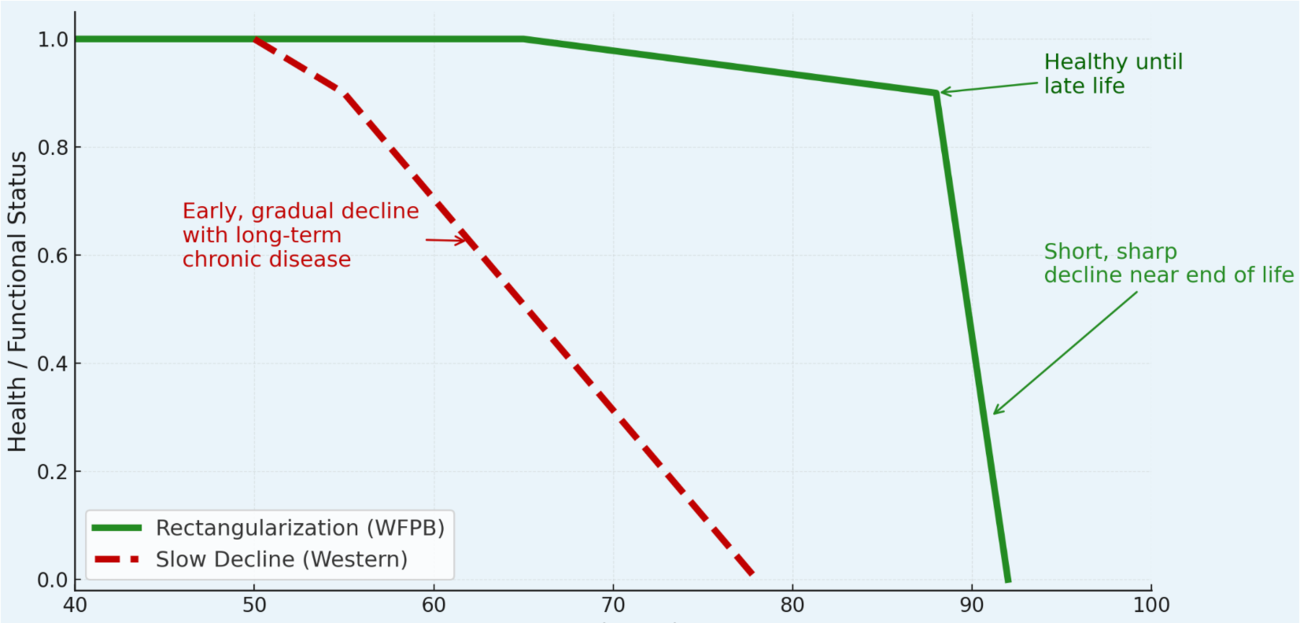
A diverse, whole-food, plant-based diet is the single most powerful way to keep the body’s healing systems in their natural, high-functioning state — protecting and repairing every part of us, from the endothelium that lines our arteries to the neurons that sustain our memory.
The China Study
In one of the largest and most comprehensive study to be conducted into diet and disease, The China Study showed plant-based diets to be associated with decreased risks of developing cardiovascular disease, cancer, diabetes, and many other diseases.¹
The China–Cornell–Oxford Project (often called the “China Study”) was a massive epidemiological survey across 65 rural counties in China during the early 1980s. Each county was remarkably homogeneous in lifestyle and genetics, which minimized variability from non-diet factors. Researchers collected blood samples, diet surveys, and health outcomes for thousands of adults. They used within-county and between-county comparisons to look at correlations between diet and disease, while controlling for age, sex, smoking, alcohol use, occupation, and socioeconomic factors. Because counties were culturally consistent internally but differed widely in dietary patterns, the study could associate population-level differences in animal vs plant food intake with disease outcomes while reducing confounding from genetics or major lifestyle disparities.
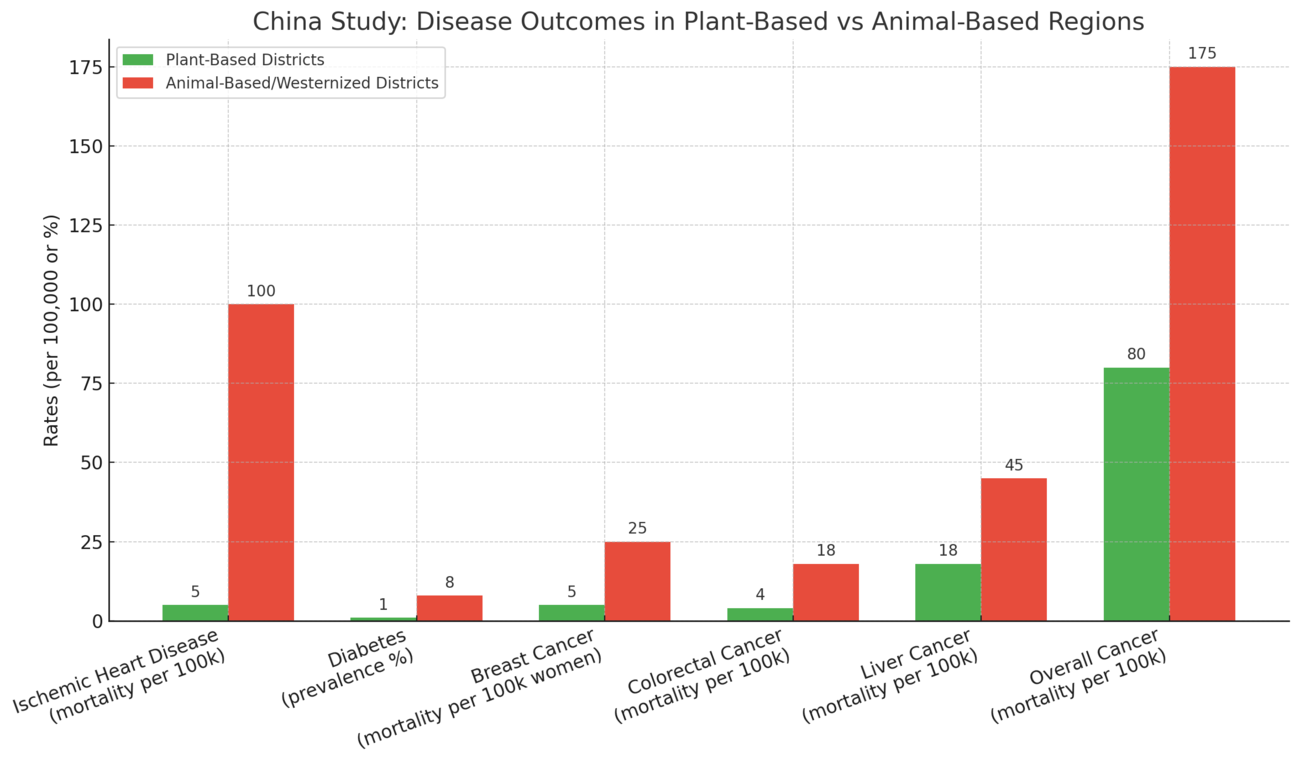
- Cholesterol & disease: A population-wide difference of ~60–80 mg/dL in cholesterol corresponded to 10–20× higher ischemic heart disease deaths.
- Cancer: Breast and colorectal cancer mortality rates were 3–5× higher in high-animal-food counties compared to plant-based ones.
- Diabetes: Almost absent in rural plant-based regions, but increasingly common (≥5–10%) where diets resembled Western intake patterns.
Since the publication of the China Study, and as a direct result of the Global Burden of Disease (GBD, 2019) Study a global scientific consensus has emerged. The two concluded that a worldwide shift to a Planetary Health Diet — rich in whole grains, legumes, fruits, vegetables, nuts, and seeds — could prevent 12 million premature deaths per year while keeping food production within planetary boundaries.² Read more in our webpage on the two EAT–Lancet Commission (2019 and 2025)
Planetary Health Diet Index (PHDI)
More recently, the Planetary Health Diet Index (PHDI) was developed and tested in three of the largest U.S. prospective cohorts (Nurses’ Health Study, Nurses’ Health Study II, Health Professionals Follow-up Study). People with the highest PHDI scores had a 23% lower all-cause mortality, and significantly lower risks of cardiovascular, cancer, respiratory, and neurodegenerative deaths, including alzheimer’s. (Bui, et al., 2024)
Specific Diseases and the Planetary Health Diet
Cardiovascular Disease
“There are two types of cardiologists – vegans, and those who haven’t read the data.”
– Dr. Kim Williams, MD, past president of the American College of Cardiology
This section is under development, check back with us soon and find out how the PEL Diet reduce LDL cholesterol and arterial inflammation, and clinical trials show they can actually reverse coronary artery disease.⁸⁹ In fact, patients allowed to eat unlimited amounts of low-fat plant-based food showed regression of their heart disease in 82% of cases.⁹
Brain Health / Alzheimer’s Disease
See our section on Brain Health and WFBP Diet
Diabetes
This section is under development, check back with us soon and see how many patients reduce or even discontinue insulin and medications completely with a WFPB diet!
Hypertension
Plant-based diets are naturally low in saturated fats and sodium and high in potassium, fiber, and antioxidants. Large meta-analyses show that vegetarians and vegans have significantly lower blood pressure than omnivores, with reductions comparable to those achieved by first-line medications.²⁸ A plant-centered diet can reduce risk of developing hypertension by up to 34%.²⁹
This section is under development, check back with us soon!
Cancer
This section is under development, check back with us soon!
Bone Health
This section is under development, check back with us soon!
Autoimmune Disease
This section is under development, check back with us soon!
Arthritis
This section is under development, check back with us soon!
Acne & Skin Health
This section is under development, check back with us soon!
Kidney Health
This section is under development, check back with us soon!
Obesity
This section is under development, check back with us soon!
Endurance Exercise & Strength Training
“Running efficiently demands good technique, and running efficiently for 100 miles demands great technique. But the wonderful paradox of running is that getting started requires no technique. None at all. If you want to become a runner, get onto a trail, into the woods, or on a sidewalk or street and run. Go 50 yards if that’s all you can handle. Tomorrow, you can go farther.”
“Humans aren't built to sit all day. Nor are we built for the kinds of repetitive, small movements that so much of today's specialized work demands. Our bodies crave big, varied movements that originate at the core of our body.”
― Scott Jurek, vegan ultramarathon champion, authro of Eat & Run: My Unlikely Journey to Ultramarathon Greatness
Far from being a disadvantage, plant-based diets support athletic performance. Whole grains and fruits enhance glycogen storage, antioxidants reduce oxidative stress, and legumes and soy provide ample protein for muscle repair. Systematic reviews show plant-based athletes match or outperform omnivores in endurance, recovery, and strength.³¹–³³
This section is under development, check back with us soon!
For Further Education
The China Study — T. Colin Campbell
How Not To Die — Michael Greger, MD
How Not To Diet — Michael Greger, MD
How Not To Age — Michael Greger, MD
Vegan For Life — Jack Norris, RD & Virginia Messina, MPH, RD
The Physicians Committee for Responsible Medicine
Prevent and Reverse Heart Disease — Caldwell Esselstyn, MD
The Proof is in the Plants - Simon Hill
Un-Do It – Dean Ornish and Anne Ornish
Eat to Beat Disease - William W Li
References
Campbell TC, Campbell TM. The China Study. USA: BenBella Books; 2006.
Willett W, Rockström J, et al. Food in the Anthropocene: the EAT–Lancet Commission. Lancet. 2019;393:447–492.
Bui LP, Pham TT, Wang F, et al. Planetary Health Diet Index and mortality. Am J Clin Nutr. 2024. doi:10.1016/j.ajcnut.2024.03.019.
National Health and Medical Research Council (2013). Australian Dietary Guidelines. Canberra.
Global Burden of Disease Study 2013. Lancet. 2014;384(9945):766–781.
Ferdowsian HR, Barnard ND. Effects of plant-based diets on plasma lipids. Am J Cardiol. 2009;104(7):947–56.
Turner-McGrievy GM, Barnard ND, Scialli AR. Vegan diet vs low-fat diet trial. Obesity. 2007;15(9):2276–81.
Esselstyn CB Jr, et al. Arrest and reversal of coronary disease. J Fam Pract. 1995;41(6):560–8.
Ornish D, et al. Lifestyle changes and coronary heart disease. Lancet. 1990;336(8708):129–33.
Bui LP, et al. “Planetary Health Diet Index and risk of mortality in three prospective cohort studies.” The American Journal of Clinical Nutrition. 2024;119(6):1155–1167.
Tonstad S, et al. Vegetarian diets and T2DM risk. Diabetes Care. 2009;32(5):791–6.
Barnard ND, et al. Vegan diet vs conventional diabetes diet trial. Am J Clin Nutr. 2009;89(5):1588s–96s.
Barnard ND, et al. Vegan diet improves glycemic control. Diabetes Care. 2006;29(8):1777–83.
Lee V, et al. Community plant-based diabetes education. J Nutr Metab. 2015;2015:236234.
Morris MC, et al. MIND diet and Alzheimer’s risk. Alzheimers Dement. 2015;11(9):1007–1014.
Ornish D, et al. Intensive lifestyle and Alzheimer’s. Alzheimers Res Ther. 2024;16:122.
Hevia-Larraín V, et al. Plant vs animal protein for muscle growth. Sports Med. 2021;51:131–148.
Nebl J, et al. Plant-based diets and physical performance. Nutrients. 2019;11(1):130.
Tessier AJ, et al. Optimal dietary patterns for healthy aging. Nat Med. 2025. doi:10.1038/s41591-025-03570-5.