Holt International
Scaling Holt International’s Child Nutrition Program (CNP) to Cambodia
“Children with feeding difficulties often resist eating, or caregivers offer less nutritious foods they believe are safer to swallow. The result is a vicious cycle — disability leads to malnutrition, and malnutrition deepens disability.”
- Emily DeLacey, Director of Nutrition & Health, Holt International
Beginning Where the Need Is Greatest
Holt International (Child Sponsorship Programs in Cambodia) and Plants Earth Life (PEL) are joining forces to bring a proven child-nutrition model to Cambodia, beginning at the National Center for Infants and Children in Phnom Penh — a place where heartbreak and hope coexist every day.
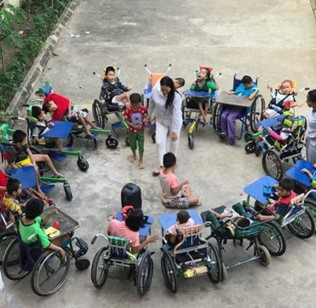
Here, roughly 180 children with severe disabilities — including cerebral palsy, Down syndrome, blindness, and congenital conditions — receive round-the-clock care from a dedicated staff working with limited resources but boundless love.
These children, many of whom have no families to return to, deserve every chance to thrive.
Guided by the tenets of the Planetary Health Diet, the program introduces a diet abundant in colorful fruits, vegetables, legumes, nuts, and whole grains — foods scientifically proven to provide the most diverse array of micronutrients, antioxidants, and bioactive compounds essential for brain and body development.
This nutrient-rich foundation strengthens immunity, reduces inflammation, and supports healthy cognitive growth — all vital for children who have experienced deprivation and medical fragility.
Because many of these children cannot feed themselves, the collaboration also prioritizes safe, evidence-based feeding techniques for those at risk of aspiration.
Caregivers receive training in proper positioning, pacing, texture modification, and responsive mealtime practices, ensuring that every child receives not just food, but dignity, safety, and joy in eating.
Why This Work Matters
Across Cambodia — and around the world — diets are shifting away from traditional, nutrient-dense foods toward ultra-processed, high-sugar, low-fiber products.
This fuels what the World Health Organization calls the triple burden of malnutrition:
- Undernutrition and food insecurity — wasting, stunting, and underweight, often paired with micronutrient deficiencies.
- Hidden hunger — shortages of essential vitamins and minerals such as iron, zinc, iodine, and folate that impair learning and immunity.
- Nutrition-related NCDs — heart disease, diabetes, cancer, and dementia linked to unhealthy diets.
The Holt-PEL initiative addresses all three — tackling the nutrition crisis where it begins: in early childhood.

At the National Center for Infants and Children, generosity often arrives in many forms. In this photo, a donation of ripe avocados inspired caregivers to prepare creamy avocado and milk smoothies — a rare and nourishing treat for the children. Holt and PEL are deeply grateful for the donations and strong government support that make moments like this possible. Together, we’re working to promote healthy food donations and build staff capacity to turn them into nutritious, joyful meals for every child. Image © Plants Earth Life (PEL)
By training caregivers, improving diets, and introducing structured monitoring and evaluation systems, we aim to build a scalable model that can later expand across Cambodia and into community-based foster and family-care settings.
Hidden hunger — the invisible lack of micronutrients — is a special focus. By enriching children’s meals with the diversity central to the Planetary Health Diet, we strengthen the biological foundation upon which learning, emotional stability, and future health depend.
Holt’s Child Nutrition Program: Focus, Reach & Strategy
Who the Program Serves
- Children in institutional care, foster systems, daycare centers for children with disabilities, and communities with high vulnerability.
- In Holt’s global work, roughly one in four children served has a disability or chronic medical condition.
- The program emphasizes early intervention, targeting infants and toddlers under age 5 — the critical window for lifelong growth and brain development.
How the Program Works
- Training of Trainers (ToT) Model
- Equipping Partners with Tools & Resources
- Routine Screening & Monitoring
- Feeding, Positioning & Mealtime Practices
- Community Integration & Outreach
Holt’s cascade training system empowers local caregiver-champions through intensive instruction in feeding, hygiene, growth monitoring, and safe positioning.
Those champions then train their peers, building a self-sustaining network of expertise.
Sites receive translated nutrition manuals, growth charts, standardized measurement tools, and, where needed, anemia and micronutrient assessment kits.
Caregivers are trained to use digital or paper-based records to track each child’s progress over time.
Regular measurement of height, weight, mid-upper arm circumference, and hemoglobin levels allows early identification of malnutrition.
Data are used to trigger individualized nutrition and feeding interventions.
Using Holt’s Feeding and Positioning Manual, caregivers learn to safely feed children with disabilities — ensuring upright posture, correct pacing, and age-appropriate textures to prevent aspiration and improve self-feeding skills.
Although rooted in institutions, Holt increasingly partners with government kindergartens, daycares, and public disability schools to bring CNP methods into community settings.
The Cambodia expansion will extend into rural areas in 2026, targeting communities facing severe food insecurity and poverty – always focusing on the most vulnerable children with disabilities.
A Shared Vision for Every Child
Holt International brings decades of experience serving orphans and children with special needs worldwide.
PEL contributes the science and advocacy of the Planetary Health Diet — translating cutting-edge nutrition research into practical, affordable interventions that heal both people and planet.
Together, Holt and PEL are uniting compassion with evidence to rewrite the story of child nutrition in Cambodia — starting with those who need it most and building toward a healthier, more sustainable future for every child.
The Reality We Must Confront
Globally, 3 – 9 million children live in institution-based care. Many entered these systems after surviving prenatal malnutrition, neglect, or disability. Watch this important video on Holt’s work across the globe.

https://www.youtube.com/watch?v=T64Npj6o98s
Despite the global movement toward deinstitutionalization, family-based alternatives in Cambodia remain limited — not enough trained foster families, inadequate funding, and minimal access to specialized care.
For these children, institutional care is often the only lifeline.
To deny them quality nutrition and care while they wait for systemic reform would be a preventable tragedy.
Deinstitutionalization and improved institutional nutrition are not competing goals — they are complementary imperatives.
As Holt’s data show, nutrition is the key that unlocks every door:
- When children are well nourished, they gain the strength to feed themselves.
- Their health stabilizes, and their chances of placement into a loving family rise.
Nutrition is not a luxury — it’s the prerequisite for dignity, development, and the possibility of family life.
A Call to Action
While global reforms move slowly, children cannot wait.
By investing in caregiver training, safe feeding practices, and nutrient-rich diets guided by Planetary Health Diet principles, we can ensure that every child — whether in an institution or a family — receives the nourishment needed to survive, grow, and thrive.
Every caregiver trained, every meal improved, and every child who learns to eat safely is a step toward justice — and toward home.

Source: National Center for Infants and Children: https://www.facebook.com/profile.php?id=100063607089415&sk=photos
About the Program (Sidebar)
Scaling Holt’s Child Nutrition Program in Cambodia
Partners: Holt International & Plants Earth Life (PEL)
Launch site: National Center for Infants and Children, Phnom Penh
Primary focus: Severely disabled and high-risk infants and children in state care.
Key interventions:
- Comprehensive caregiver training in safe feeding and positioning
- Dietary transformation guided by the Planetary Health Diet
- Growth and micronutrient monitoring
- Integration with national health and social-welfare systems
Planned expansion (2026): Rural and food-insecure communities in multiple provinces.
Ultimate goal: A Cambodia where every child — regardless of disability or circumstance — receives the nutrition and love needed to reach their full potential.
To support this important work, you can donate directly to Holt International to strengthen the Child Nutrition Program:
🔗 www.holtinternational.org/donate
Or contribute to Plants Earth Life (PEL) to help fund this initiative in Cambodia and other nutrition and sustainability projects around the world.