

Brain Health
Understand how diet plays a powerful role in preventing cognitive decline. We distill research that links plant-rich eating to lower dementia risk, better vascular support, and neuroprotective benefits — with actionable dietary guidance for brain health.
Brain Health and the Power of the PEL Diet - a Predominantly Whole-Food, Plant-Based (WFBP) Diet
Our brains are the most extraordinary of all organs — capable of memory, creativity, empathy, and love. And yet, in much of the modern world, they are under siege from what we eat. The foods that fill most supermarket aisles and restaurant menus — ultra-processed, high-fat, and low-fiber — silently inflame our bodies, disrupt circulation, and accelerate aging. But the hopeful news is this: the evidence now shows that what we eat can profoundly influence our risk of developing — and even potentially reverse — the two most common causes of dementia: Alzheimer’s disease and vascular dementia.
Evidence for the PEL Diets and Brain Health: Ten Pivotal Studies
The clearest evidence that PBWF Diets (the PELdiets) and lifestyle choices can add many years of life can years of clear cognition, lower the risk of dementia and potentially slow the progression of Alzheimer’s disease comes from these ten studies. The eight most pivotal studies in our opinion are the following.
1. Evidence from the Adventist Health Studies
The Seventh-day Adventist cohort research, primarily conducted through the Adventist Health Study (AHS), provides some of the most robust observational evidence that whole-food, plant-based (WFPB) diets can significantly lower the risk of dementia and potentially slow the progression of Alzheimer’s disease. This longevity-focused community in Loma Linda, California, serves as a "living laboratory" where lifestyle factors can be isolated from common confounders like smoking and alcohol.
The Adventist studies have produced multiple reports across different decades, each reinforcing the link between plant-based nutrition and brain health.
- Adventist Health Study-1 (AHS-1): Preliminary findings matched 272 participants and found that those who consumed meat (including poultry and fish) were more than twice as likely to develop dementia as their vegetarian counterparts (Relative Risk 2.18). When past meat consumption was factored in, the risk discrepancy nearly tripled (Relative Risk 2.99).
- Adventist Health Study-2 (AHS-2): Enrolling 96,000 members starting in 2002, this study found that various modifiable risk factors for stroke and cognitive decline—such as cardiovascular disease, diabetes, and hypertension—were significantly lower in the Adventist cohort due to their high adherence to plant-based diets.
- AHS-2 Cognitive Sub-Study: An exploratory study of older participants found that a stable dietary pattern over the life course (highly characteristic of the vegetarian group) was associated with superior memory and language abilities.
- 25-Year Follow-up (Mortality Data): Long-term data showed a 33% reduction in dementia risk for vegetarians. While this advantage narrowed in the oldest participants (aged 85+), the study emphasized that early-life dietary habits provided a "buffer" against the standard onset of neurodegenerative symptoms.
2. Landmark 2024 Intervention: Dr. Dean Ornish’s Lifestyle Trial
While the Adventist studies are observational, Dr. Dean Ornish’s 2024 randomized controlled trial (RCT) provided the first clinical evidence that these lifestyle changes can improve or stabilize cognition even after diagnosis.
- The Intervention: Participants followed an intensive 20-week program involving a WFPB diet (low in fat and refined carbs), 30 minutes of daily aerobic exercise, an hour of stress management (meditation/stretching), and social support groups.
- Key Cognitive Results: After just 20 weeks, 71% of participants in the intervention group showed improvement or stabilization in cognitive scores, whereas 68% of the control group worsened.
- Biological Biomarkers: The study measured a 6.4% improvement in the 42/40 ratio (a blood marker for amyloid protein) in the intervention group, compared to an 8.3% decline in the control group.
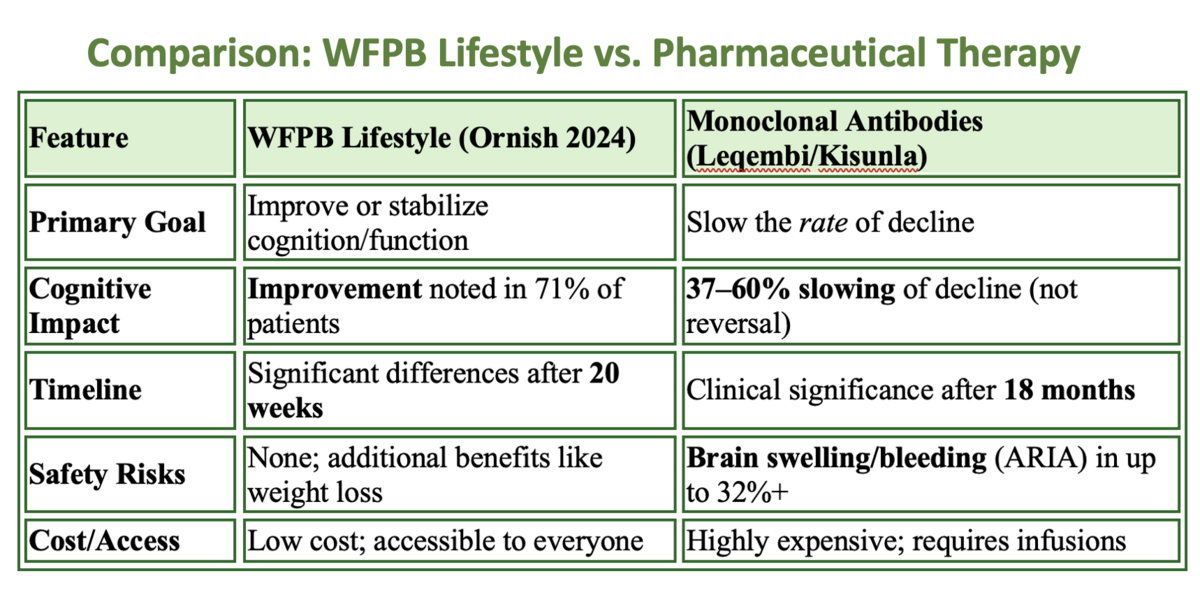
Standard pharmaceutical treatments, such as the monoclonal antibodies Leqembi (lecanemab) and Kisunla (donanemab), represent the current "best" medical therapy. However, the outcomes of a WFPB lifestyle compare favorably when considering quality of life and risk.
3. The MIND diet study (Park et al., 2025, Morris et al., 2015).
The MIND diet study (Mediterranean-DASH Intervention for Neurodegenerative Delay) provides critical evidence that specific plant-based components can significantly reduce the risk of Alzheimer’s disease, even with moderate dietary changes.
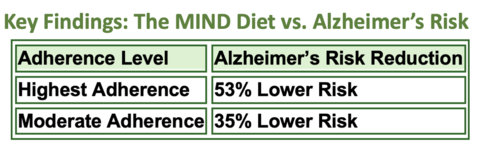
The Mind Study Breakdown: Targeted Brain Nutrition
Study Design: A pivotal prospective cohort study followed 923 older adults (ages 58–98) from the Rush Memory and Aging Project for an average of 4.5 years.
MIND Diet Composition: This hybrid diet emphasizes 10 brain-healthy food groups—specifically leafy greens, berries, nuts, whole grains, and legumes—while limiting 5 unhealthy groups including red meat, butter, pastries, and fried foods.
Unique Efficacy: Notably, the MIND diet outperformed the traditional Mediterranean diet in this cohort; while high Mediterranean adherence reduced risk by 39%, only the MIND diet showed significant protection at moderate levels.
The "Berry" Advantage: Researchers suggested that the MIND diet's specific emphasis on berries and leafy greens (distinct from general fruit intake) may offer unique, targeted cognitive protection.
4. The FINGER Study (Kivipelto, et al., 2015).
The Finnish Geriatric Intervention Study to Prevent Cognitive Impairment and Disability (FINGER) was a ground-breaking two-year randomized clinical trial involving over 2,500 at-risk participants.
- The Approach: It used a multi-domain intervention (the "five fingers"): a healthy diet, physical activity, cognitive training, social engagement, and cardiovascular monitoring.
- The Diet: Participants followed the "Healthy Nordic Diet," which mirrors the WFPB philosophy by emphasizing vegetables, fruits, whole grains, and legumes, while substituting animal fats with rapeseed oil and being sparing with red meat.
- Results: The intervention group saw a 30% lower risk of cognitive decline compared to the control group. The risk was even more pronounced for complex memory tasks and executive function.
5. The UK Biobank Cardiometabolic Study (Dunk, et al., 2025)
A recent landmark analysis of the UK Biobank cohort (over 71,000 participants aged 55+) investigated how plant-based diet quality affects those already at high risk for dementia.
- The Findings: While people with cardiovascular disease or diabetes normally have twice the risk of dementia, those who followed a high-quality WFPB diet significantly mitigated this risk.
- Quality Matters: The study distinguished between healthful PDI (whole grains, fruits, vegetables, nuts) and unhealthful PDI (sugary drinks, refined grains). Those eating processed plant foods actually had an elevated risk, whereas whole plant foods were strongly protective.
6. The Multiethnic Cohort (MEC) Study (Park, et al., 2025)
Based on data from nearly 93,000 U.S. adults, this landmark study examined the long-term impact of brain-healthy diets across five diverse racial and ethnic groups.
- Late-Life Impact: The study confirmed that improving adherence to plant-based, nutrient-rich patterns even in late life (ages 45–75 at baseline) led to a 25% lower risk of dementia over a 10-year period.
- Ethnic Consistency: The protective relationship was particularly strong among African American, Latino, and White participants.
7. The Chicago Health and Aging Project (CHAP) (Liu, et al. 2022).
This study focused on a biracial population of 3,337 participants to evaluate the association between plant-based diet quality and cognitive decline.
- Results: Adherence to a healthful plant-based diet index (hPDI) was associated with slower cognitive decline, particularly in African American older adults who are statistically at higher risk for dementia.
8. The Whitehall II Study (Sabia, et al., 2019)
This massive longitudinal study of 10,214 UK civil servants tracked participants for over 30 years to examine the relationship between midlife health and late-life brain aging.
- The Findings: Midlife cardiometabolic health (specifically the absence of diabetes and hypertension) was found to be a strong predictor of dementia risk.
- Compliance Impact: Those with optimal cardiovascular profiles in their 50s had a significantly lower risk of dementia 25–30 years later.
- Mechanistic Link: While not strictly plant-based, the study showed that diet quality, inflammation, and insulin resistance are primary drivers of neurodegeneration, providing powerful mechanistic support for WFPB interventions.
9. EPIC-Oxford: Diet and Vascular-Cognitive Links (Tong, et al., 2019)
In this cohort of 48,188 participants followed over an average of 18.1 years, researchers analyzed how distinct dietary patterns influenced major health outcomes relevant to the brain.
- The Findings: Vegetarians and vegans showed a 22% lower risk of ischemic heart disease compared to meat-eaters.
- Cognitive Proxy: Because heart disease is a major proxy and risk factor for dementia, this reduction reinforces the vascular-cognitive link central to Alzheimer's prevention.
- Results: The study indicated that the lower systemic inflammation and improved lipid profiles of those on plant-forward diets directly translated to reduced vascular-related cognitive signals.
10. Nurses’ Health Study: Diet Quality and Cognitive Aging (Kang, et al.; Morris, et al.)
This long-term analysis followed 16,010 women (aged 70+) from the Nurses' Health Study, measuring diet and cognitive function over a period of 6 years with dietary data spanning 20 years.
- The Findings: Higher diet quality—characterized by a high intake of leafy greens and flavonoid-rich foods (like berries)—was associated with significantly slower cognitive aging.
- Percentage Outcomes: Participants in the highest quintile of vegetable intake experienced a rate of cognitive decline that was equivalent to being 1–2 years cognitively younger than those in the lowest quintile.
- Specific Drivers: The protection was most pronounced for those eating at least 2 servings of leafy greens per day, showing that specific plant components can slow cognitive "wear and tear" over decades.
Lessons from the Longest-Living Societies
Across the world, populations that eat predominantly plant-based whole-food diets — like the Okinawans of Japan, the Adventists of Loma Linda, and traditional Mediterranean communities — show some of the lowest rates of dementia ever recorded. In these cultures, people consume abundant vegetables, fruits, legumes, and nuts while keeping animal products and processed foods to a minimum. These populations don’t just live longer — they maintain sharp minds and vibrant memories well into their 90s and beyond.
For example, the Okinawans once held the world’s highest average life expectancy. Their diets were 97% plant-based, rich in sweet potatoes, green leafy vegetables, and soy. Their elders were known not just for longevity, but for vitality — continuing to garden, dance, and engage socially into their late years.
How Food Activates the Brain’s Five Reparative Systems
See our section on Science and Evidence for a more general discussion on the five reparative systems and how plant-based diets power them all. This section is Adapted from book written by William W. Li, MD (“Eat to Beat Disease,” 2019)
The human brain — only about 2% of our body weight — consumes roughly 20% of all the oxygen and energy we use each day.
It depends on more than 400 miles of tiny blood vessels to deliver nutrients and remove waste. These capillaries are lined with delicate endothelial cells that regulate the brain’s blood flow, protect against toxins, and maintain the blood–brain barrier.
When we eat a poor diet low in plant foods and high in refined oils or animal fats, these endothelial cells become damaged and inflamed. The result is impaired angiogenesis — the process by which new, healthy vessels form — leading to poorer circulation, lower oxygen delivery, and ultimately, a higher risk of cognitive decline and dementia.
By contrast, plant-rich diets restore the brain’s five natural defense and repair systems, each of which protects brain structure, function, and longevity.
1. Angiogenesis - Healthy angiogenesis is critical to keeping the brain’s vast vascular network open and responsive.
- Plant foods like green tea, turmeric, garlic, tomatoes, and berries support balanced angiogenesis, encouraging new capillaries where oxygen is needed and preventing the abnormal vessel growth seen in stroke and dementia (Li et al., 2019; Carmeliet & Jain, 2011).
- This endothelial “healing” improves blood flow, neurogenesis, and cognitive resilience.
2. Regeneration — Activating Brain Repair
The adult brain can grow new neurons and strengthen synapses — a process fueled by neural stem cells and neurotrophic factors like BDNF (brain-derived neurotrophic factor).
- Blueberries, cruciferous vegetables, cacao, and walnuts enhance BDNF and neural stem cell activity, supporting learning, memory, and recovery after injury (Rando & Wyss-Coray, 2021).
3. Microbiome — The Gut–Brain Axis
The gut and brain communicate constantly through nerves, hormones, and immune signals. A healthy microbiome produces metabolites that cross the blood–brain barrier to calm inflammation and boost mood.
- Legumes, greens, whole grains, nuts, and fermented soy feed beneficial bacteria that make short-chain fatty acids like butyrate — molecules that improve cognition and reduce anxiety and depression (Sonnenburg & Bäckhed, 2016).
4. DNA Protection and Repair
Neurons are long-lived cells that must protect their DNA for decades. Oxidative stress from poor diet accelerates DNA damage, while plant antioxidants switch on repair enzymes.
- Berries, pomegranate, kale, broccoli, and green tea activate Nrf2 and other protective pathways, maintaining genomic integrity in neurons (Collins & Azqueta, 2012).
5. Immunity — Calming Neuroinflammation
Chronic inflammation in the brain is now recognized as a key driver of Alzheimer’s disease and cognitive decline.
- Turmeric, mushrooms, onions, citrus, and leafy greens modulate microglial activity, reducing inflammatory cytokines while enhancing immune surveillance (Calder, 2022; Ornish et al., 2024).
- A diet abundant in anti-inflammatory plant compounds helps the immune system protect rather than attack the brain.
Turning Genes On and Off — The Epigenetic Revolution
Perhaps the most awe-inspiring insight from modern nutrition science is that food doesn’t just fuel our bodies — it programs our genes. Studies show that within months of adopting a plant-based lifestyle, beneficial genes linked to longevity and DNA repair are upregulated, while genes promoting inflammation and cancer are silenced (Ornish et al., 2008; Dusek et al., 2019). The food we eat literally speaks to our DNA, guiding which genetic switches are turned on or off.
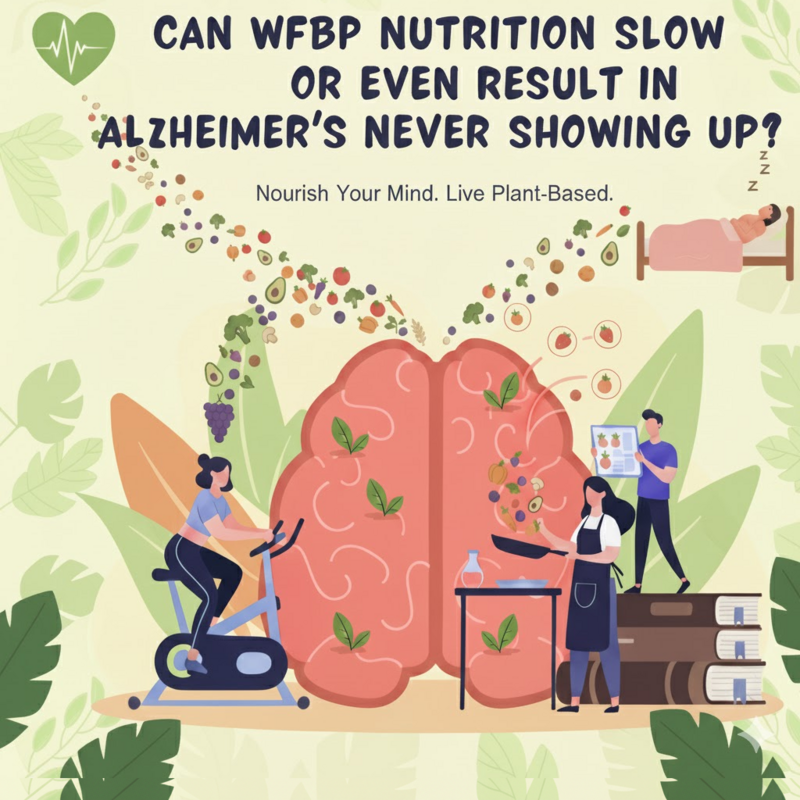
Alzheimer’s disease has many causes — but food is one of the most powerful levers we can control. While keeping the brain active, exercising, sleeping well, enjoying sunshine, and nurturing close relationships all help protect the mind, it’s the hundreds of bioactive compounds in whole-food, plant-based (WFPB) foods that truly fuel these benefits. They calm inflammation, support brain repair, and help keep Alzheimer’s-related genes switched off before damage begins. After all, no matter how good your car is, it can’t run well on bad fuel — and the same is true for your brain.
Neurons are among the longest-lived cells in the body, entrusted with protecting their DNA for decades.
Superfoods like dark leafy greens, broccoli, and other cruciferous vegetables — nature’s “DNA whispers” — help shield these cells from the oxidative stress that a poor diet unleashes. Their antioxidants and polyphenols don’t just neutralize damage; they actually activate the enzymes that repair and rejuvenate DNA, preserving the brain’s genetic blueprint for years to come.
Food as Medicine for the Mind
The prevailing evidence suggests that a predominantly — or ideally, fully — whole-food, plant-based diet may not only prevent dementia but also support reversal of its earliest stages. When paired with restorative sleep, physical activity, and social connection, these foods create the biochemical conditions for regeneration and repair. The combination of plant omega-3s (from flax, chia, and walnuts), leafy greens, berries, and legumes is a symphony for the brain — improving memory, mood, and cognition. For more on both plant and animal sources of omega-3s, see the side box.
As Dr. Michael Greger reminds us, “There are some things medicine can’t do — but your knife and fork can.” The choice to eat plants is not about restriction — it’s about liberation. It’s about waking up with clarity, aging without decline, and protecting the memories that make us who we are.
A 100-Year Brain
Imagine a world where we live not just longer, but sharper — where our final decade feels like a victory lap, not a slow fade. The science is clear: the more whole, unprocessed plants we eat, the greater our chance of a lifetime of vitality and mental clarity.
So fill your plate with color. Celebrate broccoli, beans, berries, and greens. Because every bite of real food is a message to your DNA — a message that says:
Grow strong. Repair. Remember.
The Added Power of Going 100% Whole-Food, Plant-Based
Even a predominantly plant-based diet dramatically reduces the risk of Alzheimer’s and vascular dementia. But going 100% WFPB — eliminating processed oils, refined sugars, and all animal products — appears to unlock additional benefits. The cleanest diets produce the least inflammation, best vascular function, and the lowest oxidative stress — all crucial for protecting the brain. Studies from Dr. Ornish, Dr. Caldwell Esselstyn, and Dr. Michael Greger consistently show that such diets can halt or reverse heart disease, a major risk factor for vascular dementia. And since what’s good for the heart is good for the brain, the same dietary pattern likely preserves and restores brain function too.
Supplements and Brain Health: What the Evidence Supports
While diet and lifestyle remain the most powerful tools for protecting brain health, a small number of supplements have credible evidence for supporting cognitive function or reducing risk factors for neurodegeneration—especially when dietary intake is low. The strongest data support omega-3 fatty acids (DHA/EPA) for brain structure and vascular health, with observational studies and randomized trials showing slower cognitive decline and modest benefits in mild cognitive impairment, particularly in people with low baseline intake. Vitamin B12 is essential for myelin integrity and neuronal function; deficiency is clearly linked to cognitive impairment and neuropathy, and supplementation reliably prevents reversible cognitive decline in deficient individuals. Vitamin D has been associated with brain health through observational studies linking low levels to higher dementia risk, though supplementation trials show mixed results—suggesting benefit mainly when deficiency is present. Magnesium (especially magnesium L-threonate) and iodine play supportive roles in neuronal signaling and thyroid-brain function, respectively, though high-quality dementia-specific trials remain limited.
Other supplements show promising but less definitive evidence. Creatine supports cellular energy metabolism and may improve short-term cognition and mental fatigue, particularly in plant-based eaters with lower baseline creatine intake. Curcumin and polyphenol extracts (e.g., from berries or green tea) demonstrate anti-inflammatory and antioxidant effects in mechanistic and small human studies, but bioavailability and long-term clinical impact remain variable. Importantly, no supplement has been shown to match the cognitive benefits of whole-food dietary patterns, regular physical activity, sleep, and cardiometabolic health.
Supplements Considered Essential for PEL-100
For individuals following a fully whole-food, plant-based (PEL-100) diet, the following supplements are recommended to prevent deficiency and support long-term brain and overall health:
- Vitamin B12 (non-negotiable)
- Omega-3s (DHA/EPA) from algae
- Vitamin D (especially in low sun exposure)
- Iodine (if not using iodized salt or sea vegetables regularly)
Optional, case-dependent additions:
- Magnesium
- Creatine (especially for older adults or low muscle mass)
- Iron or zinc only if deficiency is documented
Bottom line: supplements can support brain health and fill nutritional gaps, but they work best as adjuncts to a fiber-rich, plant-forward diet—not as substitutes. In PEL-100, supplements are about completeness, while food remains the foundation of cognitive resilience.
The Planetary Health Diet and Omega-3s
Sources of Omega-3s for those eating the PEL-85 Diet
For those following a predominantly whole-food, plant-based (WFPB) diet, the most potent sources of omega-3 fatty acids are fatty fish such as salmon, sardines, mackerel, herring, and anchovies. These species are rich in EPA and DHA and tend to accumulate fewer pollutants when sourced from clean, cold-water, sustainably managed fisheries. Of course while eating a PEL-85 Diet, it is always great to get a good amount of Omega3s from plant-based sources (see below).
Choosing wild-caught Alaskan salmon or small oily fish like sardines and anchovies offers the best balance of high omega-3 content and low contaminant risk.
It’s also important to eat fish in the quantities recommended by the Planetary Health Diet: 1–2 servings per week (3–4 oz each) of oily, low-contaminant fish — about 7 ounces (200 g) per week — aligns perfectly with global health and sustainability goals.
Plant-Based Sources of Omega-3s for those eating the PEL-100 diet
For those who choose a 100% whole-food, plant-based (WFPB) diet, powerful omega-3 options come directly from plants. Key sources of ALA (alpha-linolenic acid) — the essential fatty acid the body can convert into EPA and DHA — include:
• Flaxseeds (ground or as flaxseed meal)
• Chia seeds
• Walnuts
• Hemp seeds
• Canola oil (cold-pressed, in moderation)
Although conversion from ALA to DHA/EPA is limited, adding a daily supplement of algae-based DHA/EPA oil provides the same active omega-3s found in fish — without pollutants or animal products.
Together, these foods and supplements make it entirely possible to meet brain- and heart-healthy omega-3 needs while remaining fully plant-based.
The References that inform our work:
- Buettner, D., et al. (2008). The Blue Zones.
- Calder, P.C., et al. (2022). Nutrition, immunity and COVID-19. BMJ Nutr Prev Health.
- Carmeliet, P., et al. (2011). Principles and mechanisms of vessel normalization for cancer and other angiogenic diseases. Nat Rev Drug Discov.
- Collins, A.R., et al. (2012). DNA repair as a biomarker in human biomonitoring studies. Mutat Res.
- Dunk, M.M., et al. (2025). Plant-based diet quality and dementia risk. JACC: Advances.
- Dusek, J.A., et al. (2019). Epigenetic modulation and immune gene expression. Front Immunol.
- Esselstyn, C., et al. (2007). Prevent and Reverse Heart Disease.
- Fraser, G.E., et al. (2001). Ten years of life: Is it a matter of choice? Arch Intern Med.
- Gatto, N.M., et al. (2021). Vegetarian dietary patterns and cognitive function in AHS-2. J Nutr Health Aging.
- Greger, M., et al. (2023). How Not to Age.
- Kang, J.H., et al. (2005). Fruit and vegetable consumption and cognitive decline in aging women. Ann Neurol.
- Kivipelto, M., et al. (2015). A 2-year multidomain intervention to prevent cognitive decline (FINGER study). Lancet.
- Li, W.W., et al. (2019). Eat to Beat Disease. Grand Central Publishing.
- Liu, X., et al. (2022). A healthy plant-based diet and slower cognitive decline in African American older adults. Am J Clin Nutr.
- Morris, M.C., et al. (2006). Dietary copper and high saturated and trans-fat intakes associated with cognitive decline. Arch Neurol.
- Morris, M.C., et al. (2015). MIND diet associated with reduced incidence of Alzheimer’s disease. Alzheimer’s & Dementia.
- Ornish, D., et al. (2008). Gene expression changes with lifestyle intervention. PNAS.
- Ornish, D., et al. (2024). Intensive lifestyle changes and early Alzheimer’s disease. Alzheimer’s Res Ther.
- Park, S.Y., et al. (2025). MIND diet and incidence of Alzheimer’s disease across racial and ethnic groups. University of Hawaiʻi.
- Rando, T.A., et al. (2021). Stem cells and aging. Cell.
- Sabia, S., et al. (2019). Cardiovascular health at midlife and dementia risk (Whitehall II). BMJ.
- Sims, J.R., et al. (2023). Donanemab in early symptomatic Alzheimer disease. JAMA.
- Sonnenburg, J.L., et al. (2016). Diet–microbiota interactions and human metabolism. Nature.
- Tong, T.Y., et al. (2019). Diet group and vascular outcomes in EPIC-Oxford. BMJ.
- van Dyck, C.H., et al. (2023). Lecanemab in early Alzheimer’s disease. N Engl J Med.