

Fiber: The Missing Nutrient That Transforms Health
How the PEL Diets Use Fiber and the Microbiome to Prevent Cancer, Chronic Disease, and Promote Longevity
Fiber is one of the most powerful disease-fighting nutrients in the human diet—yet it is consumed in tragically low amounts across most of the world. Over 95% of people in high-income countries do not meet the recommended daily intake. This deficit has profound consequences for cancer risk, cardiovascular disease, metabolic dysfunction, inflammation, and even immune health.
A Whole-Food, Plant-Based (WFPB) or PEL-100 / PEL-85 diet naturally delivers extraordinary amounts of fiber along with the phytonutrients, antioxidants, and microbiome-supporting compounds that work together to protect long-term health.
This webpage explains:
- Why fiber is essential
- How the gut microbiome transforms fiber into disease-fighting compounds
- How fiber protects against cancer, cardiovascular disease, diabetes, and mortality
- Why animal-based diets lack fiber entirely
- Why fiber is one of the most compelling reasons to adopt the PEL dietary pattern
Summary Diagram of Fiber and the PEL Diet
1. What Fiber Actually Does Inside the Body
Unlike fat, protein, and carbohydrates, fiber is not digested by human enzymes. Instead, it is metabolized by the gut microbiome, the trillions of microbes residing in the large intestine.
When these beneficial bacteria ferment fiber, they produce short-chain fatty acids (SCFAs)—particularly butyrate, acetate, and propionate—which have profound biological effects:
- Reduce inflammation
- Strengthen the gut barrier
- Improve immune function
- Lower insulin resistance
- Reduce cholesterol
- Modulate estrogen metabolism
- Suppress cancer cell growth
- Increase satiety and support healthy weight
(Schulthess et al., 2019; Koh et al., 2016)
This makes fiber + the microbiome one of the most important therapeutic systems in modern nutrition science.
2. Fiber and the Gut Microbiome: Why WFPB Diets Are the Gold Standard
WFPB diets create a microbiome optimized for disease prevention
Studies consistently show that individuals eating WFPB diets have:
- Higher bacterial diversity
- More beneficial genera like Bifidobacteria, Faecalibacterium prausnitzii, and Roseburia
- Higher production of SCFAs, especially butyrate
- Lower levels of inflammatory bacteria associated with Western diets
(Mosca et al., 2016; De Filippis et al., 2016)
By contrast, diets high in meat, eggs, dairy, and ultra-processed foods:
- Reduce microbial diversity
- Increase inflammatory metabolites such as TMAO
- Promote bacteria associated with colorectal cancer, metabolic syndrome, and cardiovascular disease
(Wang et al., 2011; David et al., 2014)
No animal product contains fiber.
A diet centered on meat, eggs, and dairy is therefore incapable of nourishing a healthy microbiome.
3. Fiber and Cancer Prevention
A. Colorectal Cancer
High fiber intake is strongly associated with lower colorectal cancer risk.
- The WCRF/AICR Continuous Update Project concluded that each 10 g/day of fiber reduces colorectal cancer risk by about 10% (WCRF/AICR, 2018).
- People consuming the most fiber have significantly higher butyrate levels, which:
- Suppress tumor cell proliferation
- Promote apoptosis of cancer cells
- Reduce inflammation and oxidative stress
(Richardson et al., 2018)
B. Breast Cancer
Fiber lowers circulating estrogen by binding estrogen in the gut and improving hepatic metabolism.
- A pooled analysis of 20 cohort studies found that high dietary fiber intake was associated with a 8–12% reduced risk of breast cancer (Aune et al., 2012).
- The effect is even stronger when fiber comes from whole grains and legumes.
C. Prostate Cancer
Fiber-rich diets lower IGF-1 levels—one of the strongest hormonal predictors of prostate cancer progression.
- Men eating plant-based diets high in fiber have lower IGF-1 and improved hormone profiles associated with slower prostate cancer progression (Ornish et al., 2005; Giovannucci et al., 2003).
4. Fiber and Chronic Disease Prevention
Cardiovascular Disease
High-fiber diets reduce heart disease risk through multiple mechanisms:
- Lower LDL cholesterol
- Improved endothelial function
- Reduced inflammation
- Healthier microbiome-derived metabolites
A meta-analysis of 22 cohort studies showed that each 7 g/day increase in fiber lowered cardiovascular mortality by 9% (Threapleton et al., 2013).
Diabetes and Metabolic Health
Fiber slows glucose absorption and improves insulin sensitivity.
- High intake of whole grains and legumes is associated with significantly lower risk of type 2 diabetes (Aune et al., 2013).
- SCFAs improve insulin signaling and glucose metabolism.
All-Cause Mortality
Large prospective studies show that individuals with the highest fiber intake have 15–30% lower risk of death from all causes (Kim et al., 2019).
5. How Much Fiber Do We Need — and How Much Are We Actually Eating?
Recommended intake
- Women: 25 g/day
- Men: 38 g/day
- Optimal health: likely 40–60+ g/day, based on hunter-gatherer and rural African populations with negligible chronic disease.
Actual intake
Most people in high-income countries consume 10–15 g/day—less than half the recommended amount.
A PEL-100 or PEL-85 diet routinely provides 40–70 g/day without supplements.
6. Why Fiber Makes the PEL Diet So Effective
PEL-100 and PEL-85 prioritize:
- Fruits
- Vegetables
- Whole grains
- Legumes (beans, lentils, chickpeas, soy)
- Nuts and seeds
These foods contain not only fiber but the full matrix of phytonutrients that synergize with fiber to fuel a healthy microbiome.
PEL diets help the microbiome:
- Increase SCFA production
- Improve gut barrier integrity
- Reduce systemic inflammation
- Support hormone balance
- Enhance immune surveillance against cancer cells
These mechanisms help explain why WFPB diets are associated with lower rates of:
- Cancer
- Heart disease
- Diabetes
- Autoimmune diseases
- Cognitive decline
- All-cause mortality
7. Why Low-Fiber Diets Are Dangerous
Diets dominated by:
- Red and processed meat
- High-fat dairy
- Eggs
- Refined grains
- Ultra-processed foods
create a microbiome that generates:
- TMAO (linked to heart attacks and strokes)
- Pro-inflammatory metabolites
- Carcinogenic byproducts (e.g., secondary bile acids)
They also starve the beneficial bacteria that protect human health.
In fact, low-fiber diets are now considered one of the leading dietary risk factors for chronic disease worldwide.
Summary
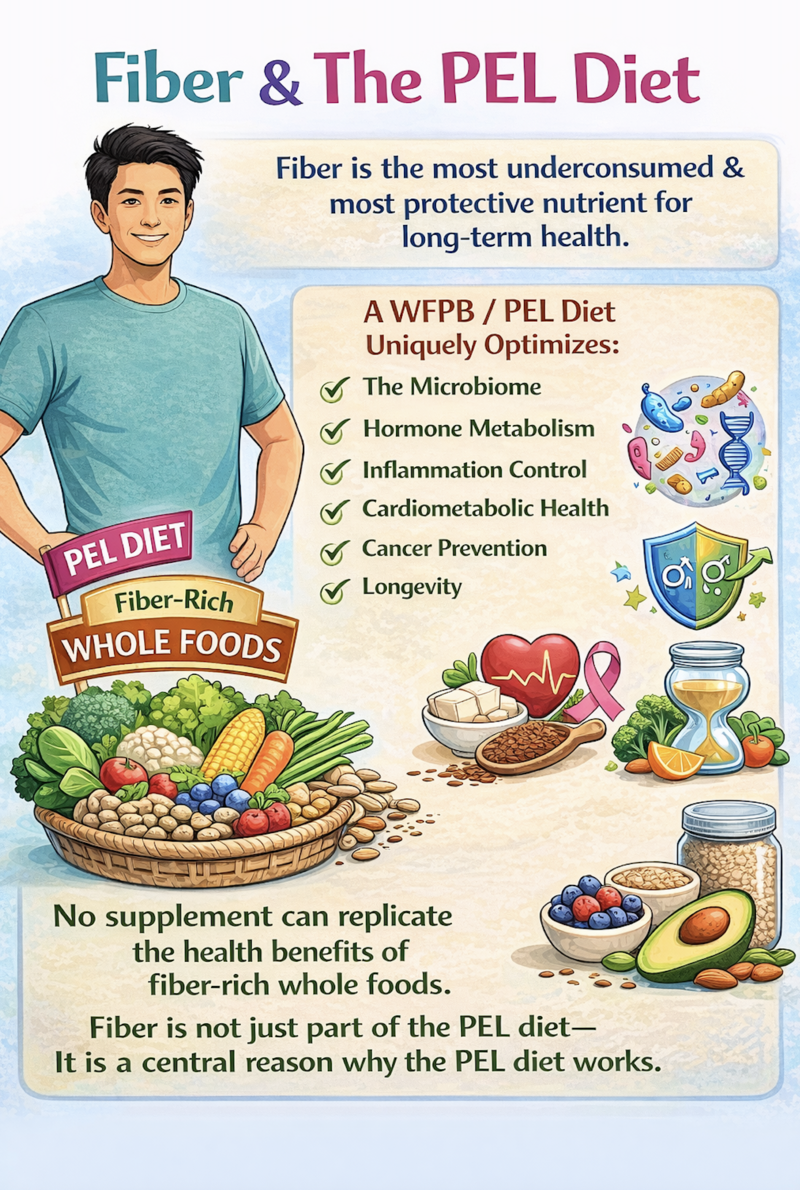
Fiber is the most underconsumed—and one of the most protective—nutrients for long-term health. While current guidelines recommend about 25 g/day for women and 38 g/day for men, evidence from hunter-gatherer and rural African populations with negligible chronic disease suggests optimal intake is likely 40–60+ grams per day. Yet most people in high-income countries consume only 10–15 grams daily, less than half the minimum recommendation. In contrast, PEL-85 and PEL-100 diets routinely deliver 40–70 grams of fiber per day without supplements, simply by emphasizing fruits, vegetables, whole grains, legumes, nuts, and seeds. These fiber-rich whole foods fuel a healthy microbiome, increasing short-chain fatty acid production, strengthening the gut barrier, reducing systemic inflammation, supporting hormone balance, and enhancing immune surveillance—mechanisms that help explain why whole-food, plant-based diets are consistently associated with lower rates of heart disease, cancer, diabetes, autoimmune disease, cognitive decline, and premature death. Diets low in fiber and dominated by animal products and ultra-processed foods do the opposite: they promote inflammatory, pro-atherogenic, and carcinogenic metabolites while starving beneficial gut bacteria. No supplement can replicate the complex, synergistic benefits of fiber-rich whole foods. Fiber is not just part of the PEL diet—it is a central reason why the PEL diet works.
References
Aune, D., et al. (2012). Dietary fiber and breast cancer risk. Ann Oncol.
Aune, D., et al. (2013). Whole grains and diabetes risk. Eur J Epidemiol.
David, L., et al. (2014). Microbiome response to animal-based diets. Nature.
De Filippis, F., et al. (2016). WFPB diets and microbial diversity. Gut.
Giovannucci, E., et al. (2003). IGF-1 and prostate cancer. Cancer Causes Control.
Koh, A., et al. (2016). SCFAs and immune regulation. Cell.
Kim, Y., et al. (2019). Dietary fiber and mortality. Am J Epidemiol.
Kirsh, V., et al. (2007). Cruciferous vegetables and prostate cancer. J Natl Cancer Inst.
Mosca, A., et al. (2016). Diet and microbiome interactions. Nutrients.
Ornish, D., et al. (2005). Lifestyle intervention in prostate cancer. J Urol.
Richardson, A., et al. (2018). Butyrate and cancer suppression. Mol Cell.
Schulthess, J., et al. (2019). SCFAs and immune homeostasis. Nature.
Song, Y., et al. (2013). Dairy and breast cancer. Prostate.
Thompson, L., et al. (2005). Flaxseed and tumor biomarkers. Clin Cancer Res.
Threapleton, D., et al. (2013). Fiber and cardiovascular risk. BMJ.
Wang, Z., et al. (2011). TMAO and cardiovascular risk. NEJM.
WCRF/AICR (2018). Continuous Update Project on fiber and cancer.