
The Science Is Clear — and Urgent
The Global Burden of Disease (GBD) Study — the most comprehensive epidemiological analysis ever conducted — found that unhealthy diets now cause more disease and premature death than any other lifestyle factor on Earth.
Poor diet has overtaken tobacco, hunger, and infectious diseases as the world’s leading cause of preventable illness — fueling epidemics of heart disease, diabetes, cancer, and dementia on an unprecedented scale.
What are we getting wrong?
The 2017 GBD analysis made it unmistakable: humanity is eating too few whole plant foods — the fruits, vegetables, whole grains, legumes, nuts, seeds, and omega-3–rich plants that our bodies and planet were designed to thrive on. In their place, we’ve flooded our diets with refined sugars and starches, saturated fats, salt, ultra-processed foods, and excessive animal products.
This imbalance is not just making us sick — it’s destabilizing the planet itself. The same foods that harm our hearts are heating our climate, degrading our soils, and destroying biodiversity. Rebalancing the plate toward whole, plant-rich foods is not only the single most powerful step we can take for human health — it’s essential for the survival of life on Earth.
The Evidence Is Overwhelming
High-quality nutrition science — from massive cohort studies to randomized clinical trials — now consistently points to one solution: eat more whole, plant-based foods and fewer animal-based and ultra-processed ones.
Across thousands of peer-reviewed studies, this pattern emerges again and again: populations consuming diets rich in whole plants live longer, healthier lives and leave a lighter footprint on the planet.
Yet despite decades of clear evidence, confusion about what to eat has never been greater. Every week brings a new diet headline or viral influencer claiming to have the answer. Meanwhile, most people in high-income countries still get the bulk of their calories from ultra-processed foods, sugary drinks, refined grains, and meat-heavy meals.
In the United States, fewer than 12.1% adults (CDC 2017) eat the recommended amount of fruits and vegetables each day.
What are the foods that stack the odd?
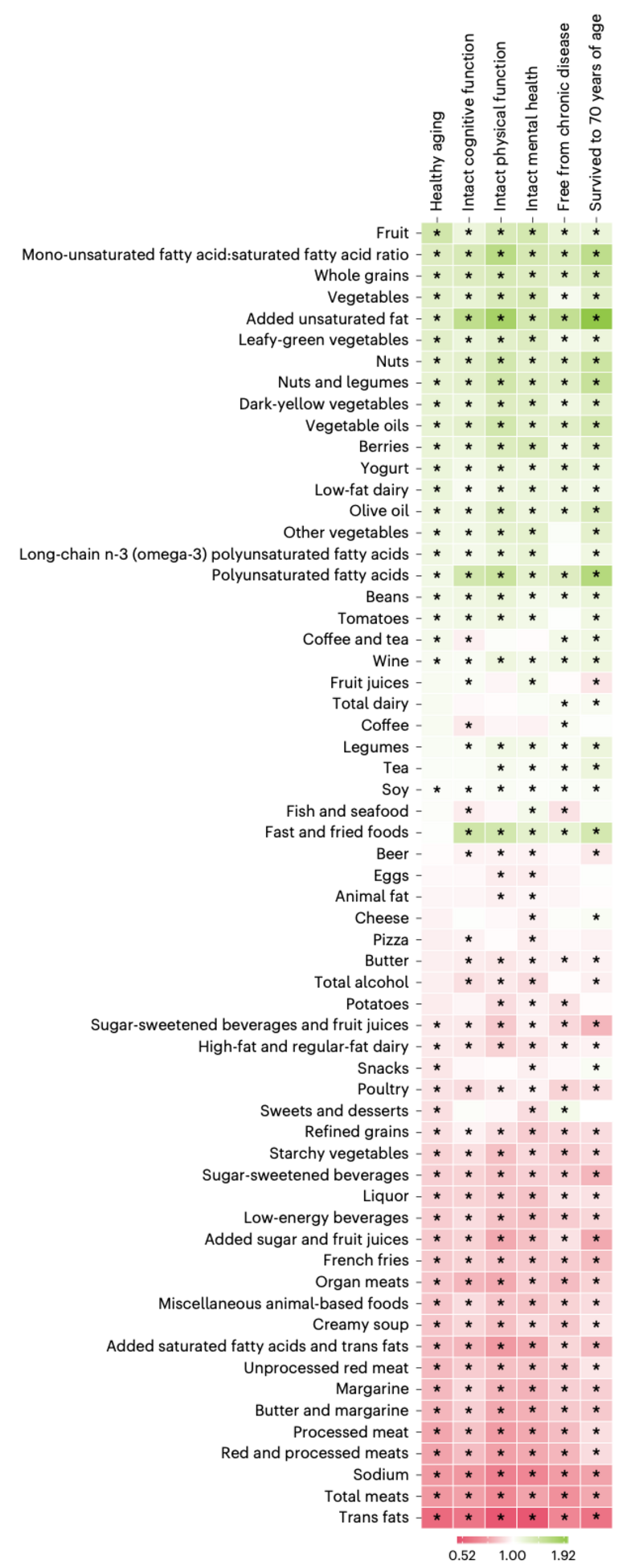
What we eat doesn’t just influence how long we live—it strongly shapes how well we live as we age. A landmark 2025 study published in Nature Medicine examined dietary patterns and healthy aging in more than 105,000 adults followed for up to 30 years (Tessier et al., 2025). The researchers focused on healthy aging: reaching older age free of major chronic disease, with preserved physical, cognitive, and mental health. Even among relatively healthy diets, only 9.3% of participants achieved healthy aging. Those whose diets were most strongly centered on whole, minimally processed plant foods had substantially higher odds—nearly doubling in some comparisons—of aging well, especially when healthy aging was defined as being healthy at age 75.
Across all dietary patterns studied, the foods most consistently associated with healthy aging were fruits, vegetables (especially leafy greens and orange/yellow vegetables), whole grains, legumes, nuts, berries, soy foods, olive oil, and other unsaturated plant fats (Tessier et al., 2025). In contrast, red and processed meats, refined grains, added sugars, sugar-sweetened beverages, trans fats, high sodium intake, and animal fats were consistently linked to poorer aging outcomes. Rather than identifying a single “best” diet, the study demonstrated a clear gradient: the more a person’s diet was dominated by whole plant foods, the greater their likelihood of healthy aging. This pattern closely aligns with PEL-85, which emphasizes predominantly whole-food, plant-based eating, and is strongest at the PEL-100 end of the spectrum, where whole plant foods fully dominate the diet.
These findings are summarized in the heat map shown on this page, which visualizes multivariable-adjusted associations between individual foods and six domains of healthy aging, including cognitive and physical function, mental health, freedom from chronic disease, and survival to age 70 (Tessier et al., 2025). The heat map makes the takeaway unmistakable: the greenest, most protective signals cluster around whole, minimally processed plant foods, while animal-heavy and ultra-processed dietary components drive the most consistent harms. PEL-85 captures most of this benefit; PEL-100 aligns with the strongest protective signals across domains. This study—and a detailed explanation of the heat map—are discussed further in the PEL Science Hub: Chronic Disease, where the biological mechanisms linking diet, chronic disease, and aging are explored in greater depth.
Gaining a Decade of Life: The Role of Food (and Movement)
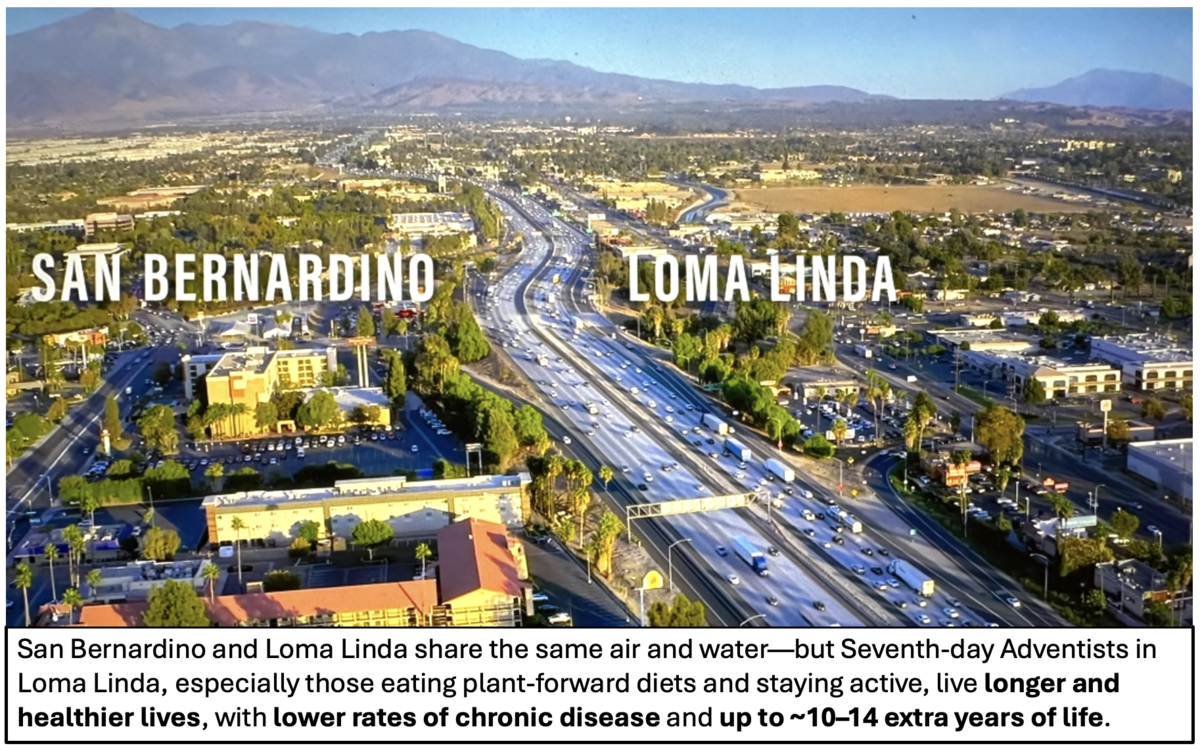
Some of the clearest evidence that lifestyle choices can add many years of life comes from the long-running Adventist Health Studies (AHS-1 and AHS-2)—among the most informative cohorts ever assembled to study diet, lifestyle, and longevity (Fraser et al., 2001; Orlich et al., 2013).
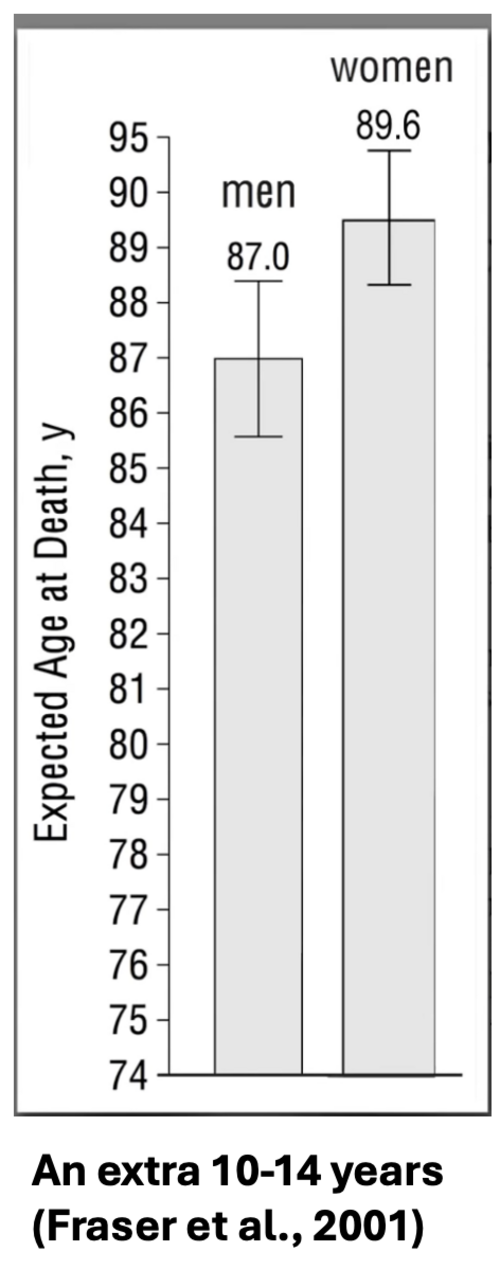
In the landmark analysis “Ten Years of Life: Is It a Matter of Choice?”, researchers followed more than 34,000 California Seventh-day Adventists and compared their survival with the general population. Adventist men lived 7.3 years longer and women 4.4 years longer than non-Adventists, placing them among the longest-lived, well-described populations in the world (Fraser et al., 2001). Importantly, this advantage was not explained by genetics, wealth, or access to health care, but largely by modifiable behaviors, especially diet and physical activity.
Diet matters—but diet plus movement matters more
Within the Adventist population itself, differences in lifestyle translated into up to 10 additional years of life expectancy. Diet played a central role. Vegetarian and largely whole-food, plant-based dietary patterns were independently associated with 1.5–2.5 extra years of life, even after accounting for other behaviors (Fraser et al., 2001; Orlich et al., 2013). Regular physical activity added another 2–4 years, and frequent intake of whole plant foods—such as nuts—added further benefit (Fraser et al., 2001).
When these behaviors clustered together—mostly whole-food, plant-based eating, regular movement, healthy body weight, and non-smoking—the combined effect approached a full decade of added life compared with higher-risk patterns (Fraser et al., 2001).
This pattern closely mirrors what PEL describes as PEL-85: diets that are predominantly whole-food, plant-based, realistic to sustain, and paired with active living. These patterns capture most of the longevity benefit observed in the Adventist studies.
The “best of the best”: approaching PEL-100
The longest-lived subgroups—the lowest-risk individuals—were those whose diets were most consistently whole-food and plant-based across adulthood, combined with sustained physical activity and other low-risk behaviors. When diet, exercise, body weight, and smoking status were considered together, the gap between these individuals and the highest-risk patterns plausibly reached 12–14 years of life expectancy (Fraser et al., 2001; Orlich et al., 2013).
This represents what PEL calls PEL-100: a fully whole-food, plant-based pattern with minimal ultra-processed foods and lifelong consistency. While fewer people achieve this level of adherence, the evidence suggests it may stack the odds even further—for both lifespan and healthspan.
Longer life—and better life
Crucially, the added years seen in Adventists were not years of prolonged frailty. Across multiple analyses, Adventists—especially those eating plant-forward diets—experienced lower rates of cardiovascular disease, diabetes, cancer, disability, and medication use, indicating that longer life was largely accompanied by better health and function (Fraser et al., 1999; Fraser et al., 2001; Orlich et al., 2013).
Importantly, these same dietary patterns were also associated with substantially lower risk of cognitive decline and dementia.
- PEL-85 (Predominantly Whole-Food, Plant-Based):
Dietary patterns consistent with PEL-85—where whole, minimally processed plant foods dominate alongside regular physical activity—have been associated with meaningfully lower dementia risk, with Adventist and related cohort studies suggesting approximately a 30% reduction in Alzheimer’s disease and other dementias compared with more animal- and processed-food–heavy patterns (Fraser et al., 2001; Orlich et al., 2013; Morris et al., 2015).
- PEL-100 (Fully Whole-Food, Plant-Based):
At the highest level of adherence, dietary patterns consistent with PEL-100 show the strongest and most consistent cognitive protection, with large cohort analyses suggesting roughly a 40–50% lower risk of Alzheimer’s disease and other dementias—an effect size comparable to, or exceeding, that of most pharmacologic prevention strategies studied to date (Fraser et al., 2001; Morris et al., 2015; Tong et al., 2019).
What this means for PEL
Taken together, the Adventist Health Studies provide some of the strongest real-world evidence that food plays a central role in shaping human lifespan, especially when paired with regular movement. Diets centered on whole, minimally processed plant foods, eaten consistently over decades, appear capable of adding many healthy years of life—far beyond what most medical interventions can deliver.
PEL-85 captures most of this benefit.
PEL-100 likely captures even more.
In short, gaining a decade of life is not a fringe claim. In these populations, it was a pattern—and food was one of the dominant drivers.
How Much Longer Could We Live by Changing What We Eat?
One of the most striking estimates of how food choices affect lifespan comes from a large 2022 modeling study published in PLOS Medicine by Fadnes and colleagues. Using data from multiple meta-analyses and the Global Burden of Disease study, the authors estimated how sustained dietary changes influence life expectancy across adulthood.
The researchers modeled a shift from a typical Western diet toward an “optimized” diet that closely mirrors the Planetary Health Diet—higher intakes of whole grains, legumes, fruits, vegetables, and nuts, with minimal red and processed meat, refined grains, and sugar-sweetened beverages.
The headline finding: food alone can add years—at any age
The estimated gains in life expectancy depended on when the dietary shift began, but were substantial across the lifespan:
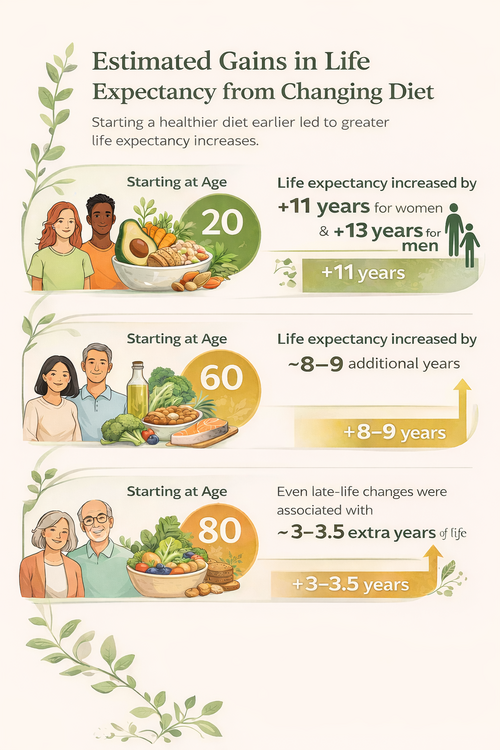
Starting at age 20:
Life expectancy increased by ~11 years for women and ~13 years for men.
Starting at age 60:
Life expectancy increased by ~8–9 additional years.
Starting at age 80:
Even late-life changes were associated with ~3–3.5 extra years of life.
Where do the extra years come from?
The largest contributors to longer life were:
- Eating more legumes, whole grains, and nuts
- Eating less red and processed meat
These changes primarily reduced deaths from cardiovascular disease, cancer, and metabolic disease—the leading causes of premature mortality worldwide. Importantly, benefits were seen even when changes were made later in life, though starting earlier yielded larger gains.
What this means for PEL
This study reinforces a core message of PEL:
- PEL-85 (predominantly whole-food, plant-based) likely captures most of the achievable longevity benefit.
- PEL-100 (fully whole-food, plant-based) aligns closely with the “optimized” diet in this analysis and appears capable of stacking the odds even further—especially when adopted earlier and maintained over time.
Perhaps most powerful of all: the model suggests that dietary change is not “too late” at any age. Even in the eighth decade of life, meaningful gains in longevity are still possible.
The Body’s Five Defense Systems — and How Plants Power Them All
This section describes the biological mechanism that make Modern science reveals something extraordinary: the human body is not a passive victim of disease. It comes equipped with five powerful biological defense systems that constantly protect, repair, and renew us.
Dr. William W. Li’s research (Li et al., 2019) shows that food is among the most potent ways to activate these systems — and that whole, plant-based foods support all five simultaneously.
1. Angiogenesis – The System of Blood Vessel Growth
1. Angiogenesis – The System of Blood Vessel Growth
Our capillaries deliver oxygen and nutrients to every cell. Healthy angiogenesis keeps this network balanced—allowing new vessels to grow where needed (like healing a wound), while preventing excess vessel growth that can feed tumors or cause blindness. The brain alone has more than 400 miles of tiny blood vessels, working constantly to deliver nutrients and remove waste. These capillaries—and blood vessels throughout the body—are lined with delicate endothelial cells that regulate blood flow, protect against toxins, and maintain a Teflon-like surface inside our arteries that prevents clots and inflammation. When this protective lining breaks down, it increases the risk of heart attacks, strokes, and inflammation in the brain—damage linked to Alzheimer’s disease and vascular dementia.
A plant-rich, antioxidant diet helps preserve this Teflon-like protection that keeps every organ strong and resilient.
- Plant power: Green tea catechins, soy isoflavones, turmeric curcumin, and compounds in berries, garlic, and tomatoes can safely inhibit abnormal vessel growth while supporting healthy regeneration (Li et al., 2019; Carmeliet & Jain, 2011).
1. Angiogenesis
The body’s ability to grow and regulate blood vessels. Healthy angiogenesis ensures tissues receive oxygen and nutrients while preventing excess vessel growth that can fuel diseases such as cancer. Plant-based foods play a critical role in optimizing angiogenesis—supporting the growth of healthy blood vessels while suppressing the abnormal vessel formation that fuels cancer, diabetic complications, and cardiovascular disease. Polyphenols, flavonoids, and nitrates found in whole plant foods help maintain proper vascular signaling, improve endothelial function, and enhance nitric oxide availability, ensuring that tissues receive adequate oxygen and nutrients without tipping into pathological overgrowth.
- Plant power: Green leafy vegetables (such as spinach, arugula, and beet greens), berries, tomatoes, citrus fruits, green tea, dark chocolate (≥70% cocoa), and legumes contain bioactive compounds that promote healthy angiogenesis while inhibiting excessive or dysfunctional vessel growth (Li et al., 2019; Carmeliet & Jain, 2011).
2. Regeneration – The System of Stem Cells
Even in adulthood, stem cells remain active in repairing our tissues. Certain plant compounds can boost stem cell survival and mobilization.
- Plant power: Blueberries, walnuts, cruciferous vegetables, and dark chocolate polyphenols stimulate tissue repair and stem cell resilience (Li et al., 2019; Rando & Wyss-Coray, 2021).
3. Microbiome – The Gut’s Inner Ecosystem
Our gut microbiota shape immunity, metabolism, and even mood. A diverse, fiber-rich plant-based diet nourishes beneficial microbes that produce short-chain fatty acids, strengthen the gut barrier, and regulate inflammation.
- Plant power: Beans, whole grains, leafy greens, nuts, and fermented soy foster microbiome diversity and “postbiotic” molecules that calm inflammation and improve metabolic health (Li et al., 2019; Sonnenburg & Bäckhed, 2016).
4. DNA Protection and Repair
Every day, our DNA experiences tens of thousands of hits from oxidative stress and environmental toxins. Phytochemicals from plants enhance the body’s repair enzymes and neutralize free radicals.
- Plant power: Antioxidants in berries, pomegranates, green tea, and cruciferous vegetables help maintain genomic stability and slow cellular aging (Li et al., 2019; Collins & Azqueta, 2012).
5. Immunity – The System of Defense and Renewal
A well-regulated immune system defends against pathogens while avoiding chronic inflammation that drives disease.
- Plant power: Mushrooms, onions, citrus, turmeric, and colorful fruits and vegetables provide β-glucans, quercetin, vitamin C, and thousands of phytonutrients that train the immune system to respond appropriately (Li et al., 2019; Calder, 2022).
Why The Five Defense Systems and Plants Matter — Your Body’s Default Setting is to Heal Itself
Each system is interconnected — and a predominantly whole-food, plant-based diet amplifies their synergy. These same mechanisms also explain why the Planetary Health Diet can simultaneously prevent disease, promote healing and repair, and often result in longevity.
Our bodies are not designed for chronic disease — they are designed to heal. Every cell, tissue, and organ has built-in repair mechanisms that operate constantly to restore balance and maintain life. This self-healing default mode is the body’s natural state. However, when we fail to nourish it with the diversity of whole, plant-based foods it depends on — rich in antioxidants, phytonutrients, fiber, and anti-inflammatory compounds — these defense systems become impaired. Instead of healing, the body shifts into chronic inflammation, oxidative stress, and metabolic dysfunction — the root causes of most modern diseases.
When that happens, disease begins to dominate. For many people, the decline starts quietly in midlife — blood pressure rises, weight creeps up, arteries stiffen, insulin sensitivity fades — and by our 50s and 60s, illness becomes the “new normal.”
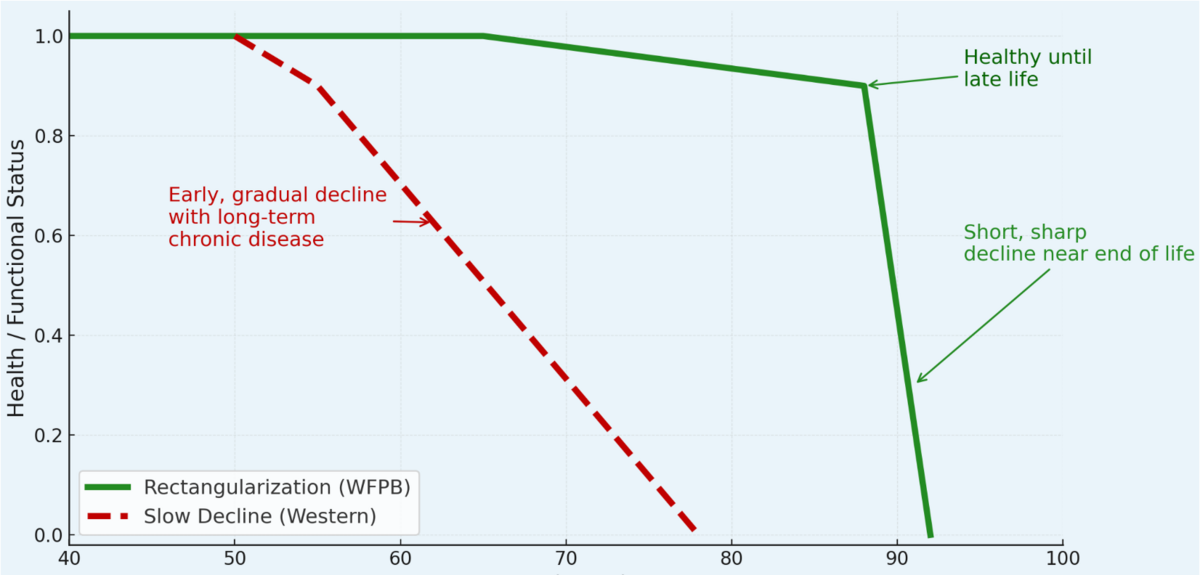
But it doesn’t have to be this way. Populations following plant-forward diets demonstrate what scientists call the “Rectangularization of Life’s Curve” — living most of life in good health, followed by only a short period of decline at the end. The goal is not just to extend lifespan, but to extend healthspan — compressing morbidity so that the years we gain are years of vitality, clarity, and purpose.
Stacking the Odds: Why Longevity Begins Before the Fifth Birthday
Just as the aging body has a natural capacity to repair and thrive when properly nourished, the developing child has a narrow and critical window in which nutrition determines lifelong health, cognitive potential, and resilience. In millions of children under five, that window is being compromised by “hidden hunger”—not only from food insecurity and insufficient calories, but from the absence of nutrient-dense, whole plant foods that provide essential vitamins, minerals, fiber, and bioactive compounds required for brain development and immune function. While inadequate intake of carbohydrates, protein, and fats unquestionably contributes to undernutrition, a large and growing body of evidence shows that deficiencies in micronutrients—such as iron, zinc, iodine, folate, vitamin A, and other plant-derived phytonutrients—play a decisive role in impaired cognitive development, weakened immunity, recurrent infections, stunting, and failure to thrive. When young children are deprived of diverse vegetables, legumes, fruits, whole grains, nuts, and seeds, the brain’s rapid growth, synapse formation, and myelination are disrupted, and the immune system struggles to fight even routine infections. The consequences are often irreversible, shaping educational attainment, economic productivity, and health across the life course.

Robust evidence from global analyses—including the Lancet Series on Maternal and Child Nutrition and WHO/UNICEF reports—demonstrates that improving access to diverse, nutrient-dense, plant-based whole foods is one of the most powerful and cost-effective interventions to protect early brain development, strengthen immunity, and allow children not merely to survive, but to truly thrive. The goal is not merely to provide enough calories to survive, but to provide the specific, high-quality nutrients required to thrive—compressing vulnerability so that every child can grow with clarity, strength, and a future full of promise.
Talk about stacking the odds for longevity: without access to diverse, nutrient-dense, whole plant foods, many children may never even reach their fifth birthday.
A diverse, whole-food, plant-based diet is the single most powerful way to keep the body’s healing systems in their natural, high-functioning state — protecting and repairing every part of us, from the endothelium that lines our arteries to the neurons that sustain our memory.
For Further Education
The China Study — T. Colin Campbell
How Not To Die — Michael Greger, MD
How Not To Diet — Michael Greger, MD
How Not To Age — Michael Greger, MD
The Physicians Committee for Responsible Medicine
Vegan For Life — Jack Norris, RD & Virginia Messina, MPH, RD
Prevent and Reverse Heart Disease — Caldwell Esselstyn, MD
The Proof is in the Plants - Simon Hill
Un-Do It – Dean Ornish and Anne Ornish
Eat to Beat Disease - William W Li
References: The Science That Informs Our Work
Aune, D., et al. (2012). Dietary fiber and breast cancer risk. Ann Oncol.
Barnard, N.D., et al. (2005). A low-fat vegan diet improves glycemic control. Diabetes Care.
Barnard, N.D., et al. (2006). Vegan diet improves glycemic control. Diabetes Care. 29(8):1777–83.
Barnard, N.D., et al. (2009). Vegan diet vs conventional diabetes diet trial. Am J Clin Nutr. 89(5):1588s–96s.
Bui, L.P., Pham T.T., Wang F., et al. (2024). Planetary Health Diet Index and mortality. Am J Clin Nutr. doi:10.1016/j.ajcnut.2024.03.019.
Bui, L.P., et al. (2024). Planetary Health Diet Index and risk of mortality in three prospective cohort studies. Am J Clin Nutr. 119(6):1155–1167.
Campbell, T.C., Campbell, T.M. (2006). The China Study. BenBella Books.
De Filippis, F., et al. (2016). WFPB diets and microbial diversity. Gut.
Esselstyn, C.B., et al. (1995). Arrest and reversal of coronary disease. J Fam Pract. 41(6):560–8.
Esselstyn, C.B., et al. (1999; 2014). Reversal of coronary artery disease.
Ferdowsian, H.R., Barnard, N.D. (2009). Effects of plant-based diets on plasma lipids. Am J Cardiol. 104(7):947–56.
Giovannucci, E., et al. (2003). IGF-1 and disease risk. Cancer Causes Control.
Global Burden of Disease Study 2013. (2014). Lancet. 384(9945):766–781.
Hevia-Larraín, V., et al. (2021). Plant vs animal protein for muscle growth. Sports Med. 51:131–148.
Kahleova, H., et al. (2011). Plant-based diets and insulin sensitivity.
Koh, A., et al. (2016). SCFAs and immune regulation. Cell.
Lee, V., et al. (2015). Community plant-based diabetes education. J Nutr Metab. 2015:236234.
Morris, M.C., et al. (2015). MIND diet and Alzheimer’s risk. Alzheimers Dement. 11(9):1007–1014.
National Health and Medical Research Council. (2013). Australian Dietary Guidelines. Canberra.
Nebl, J., et al. (2019). Plant-based diets and physical performance. Nutrients. 11(1):130.
Nat Med. (2025). Optimal dietary patterns for healthy aging (105,015 participants). Nature Medicine.
Ornish, D., et al. (1990). Lifestyle changes and coronary heart disease. Lancet. 336(8708):129–33.
Ornish, D., et al. (1998; 2005; 2008). Lifestyle interventions and chronic disease reversal.
Ornish, D., et al. (2024). Intensive lifestyle and Alzheimer’s. Alzheimers Res Ther. 16:122.
Shu, X.O., et al. (2009). Soy food intake and breast cancer survival. JAMA.
Tessier, A.J., et al. (2025). Optimal dietary patterns for healthy aging. Nat Med. doi:10.1038/s41591-025-03570-5.
Threapleton, D., et al. (2013). Fiber and cardiovascular health. BMJ.
Tonstad, S., et al. (2009). Vegetarian diets and T2DM risk. Diabetes Care. 32(5):791–6.
Turner-McGrievy, G.M., Barnard, N.D., Scialli, A.R. (2007). Vegan diet vs low-fat diet trial. Obesity. 15(9):2276–81.
WCRF/AICR. (2018). Continuous Update Project on diet and cancer.
Willett, W., Rockström, J., et al. (2019). Food in the Anthropocene: the EAT–Lancet Commission. Lancet. 393:447–492.
Zhang, Y., et al. (2017). Soy intake and recurrence/mortality. Cancer.